


Fall Layering Tips: 5 Episodes, One Temperature Cheat Sheet
Disclosure: This post contains affiliate links. We may earn a commission at no additional cost to you if you make a purchase through these links.
Fall Layering Tips: 5 Episodes, One Temperature Cheat Sheet (Series Finale)
📚 가을에 어울리는 코디는? · EP 06 · FINAL
Fall layering tips get confusing when a 48°F morning turns into a 68°F afternoon. The fix is to dress by temperature band: a breathable base, a removable mid layer, and an outer piece you can carry. Every swap tugs at necklaces, so ear-level gold, like a slim threader earring, is the accessory least likely to snag.
Key Takeaways
Fall layering works best in three parts: a breathable base, a removable mid layer, and an outer layer you can carry.
Dressing by temperature band (below 40°F, 40–50°F, 50–60°F, 60–70°F, above 70°F) prevents both overheating and morning shivers.
Fine necklaces snag most on open-weave knits, so moving jewelry to ear level solves the problem instead of fighting it.
Fall 2026 swaps muted "quiet luxury" tones for cobalt blue, regal purple, and scarlet, according to Vogue Korea and Bustle.
18K gold plating lasts longer when you keep it away from water, perfume, and lotion.
Episode 6 is the final part of the "What to Wear in Fall?" series. Instead of starting a new topic, the finale collects the single most useful lesson from each earlier episode and turns them into one temperature cheat sheet and one checklist you can run through in a few minutes before you get dressed. By the end, you will know what to wear at each temperature, which jewelry survives a day of layering, and how to keep that jewelry looking new until spring.
What Is a Fall Transitional Weather Outfit?
A fall transitional weather outfit is a set of layers built to handle a 15–20 degree swing within one day, from a cold morning to a mild afternoon. The goal is not warmth alone. Each layer should come off or go back on in seconds without wrecking the look or the jewelry underneath.
Most fall outfits fail at the handoff, not at the start. The coat that felt right at 8 a.m. ends up draped over a chair, and the cardigan pulled off over your head drags a pendant chain along with it. Five episodes of this series kept coming back to the same idea: plan the removal before you plan the look.
How Do You Layer Fall Outfits by Temperature?
The easiest way to layer fall outfits is to match the number of layers to the temperature band: one layer above 70°F, two from 60–70°F, three from 50–60°F, and three to four below 50°F. Choose the outer layer for the morning low and the base layer for the afternoon high.
Use the cheat sheet below as a starting point, then adjust for wind, rain, and how cold your office runs. The jewelry column is the part most fall layering guides skip, and it is where most morning frustration comes from.
Temperature | Layers | Example outfit | Jewelry move |
|---|---|---|---|
Above 70°F | 1 | Tee or light knit with straight-leg jeans | Anything goes; necklaces sit freely |
60–70°F | 2 | Base tee plus a cardigan or overshirt you can tie at the waist | Short necklace or threader earrings |
50–60°F | 3 | Base, thin knit, trench or leather jacket | Shift to ear-level pieces; jackets come on and off |
40–50°F | 3–4 | Base, knit, wool coat, silk or wool scarf | Earrings over necklaces; scarves catch chains |
Below 40°F | 4 | Thermal base, turtleneck, statement coat, scarf | Earrings only, or a necklace tucked under the turtleneck |
Save the table if nothing else. If a friend of yours stands in front of the closet every October morning checking the weather app three times, the cheat sheet is the part to send her.
Episode 1 Recap: How Do You Free a Necklace Stuck in a Sweater?
Episode 1 tackled the most common fall jewelry problem: a necklace caught inside a sweater. The takeaway was to stop pulling, unclasp the necklace first, and work the chain out slowly. The longer-term fix was putting the necklace on after the sweater, not before.
Episode 1 also set up the theme for the whole series. Jewelry trouble in fall is rarely about the jewelry itself. Order of operations, meaning what goes on first and what comes off last, decides whether a chain survives the morning.
Episode 2 Recap: Why Do Necklaces Snag on Knit Sweaters?
Episode 2 compared four common fall fabrics and found that open, textured weaves snag fine chains far more often than smooth, tight ones. The single takeaway: match chain weight to fabric texture, and when the knit is loose or fuzzy, keep delicate chains off the fabric entirely.
Episode 2 is also where the series first pointed toward earrings. Once the sweater is the problem, the simplest solution is to move the gold somewhere the knit cannot reach.
Episode 5 Recap: Is Layering or a One-Piece Outfit Better for Fall?
Episode 5 weighed layered outfits against one-piece looks such as knit dresses and jumpsuits. Layering won on days with big temperature swings because you can shed pieces, while a one-piece won on steady, cool days because there is less to adjust. Both work; the forecast decides.
Episode 5 matters for jewelry too. A one-piece outfit lets a necklace sit in one place all day, while a layered outfit forces at least two or three jacket and cardigan changes, which is exactly when chains catch.
What Colors Are Trending for Fall 2026 Layering?
Fall 2026 colors are bolder than recent seasons. According to Vogue Korea (2026), cobalt blue is forecast as a centerpiece color for Fall 2026, a deliberate break from muted autumn tones. Bustle (2026) names regal purple, scarlet, fuchsia, and punchy pink as leading colors for the season.
Silhouettes are shifting just as much. Vogue Korea (2026) describes a 1980s revival of nipped waists, exaggerated shoulders, and saturated color blocking, seen on runways such as Valentino and Mugler. Bustle (2026) adds that shapeless minimalism is giving way to defined waists, polished skirt suits, straight-leg jeans, velvet, and statement outerwear, with lace, bows, and ruffles returning alongside tweed, knits, and layered leather. Stella McCartney and Isabel Marant offered a relaxed, sporty counterpoint for anyone who prefers ease over structure.
Accessories carry the personality. Per WhoWhatWear and Bustle (2026) runway coverage, designers are leaning on silk scarves, colorful tights, and brooches to express individuality. For layering, a strong cobalt or scarlet mid layer already does the talking, so the jewelry works best when it is small, warm-toned, and placed where it will not compete with a scarf.
Which Earrings Go Best With Fall Layers?
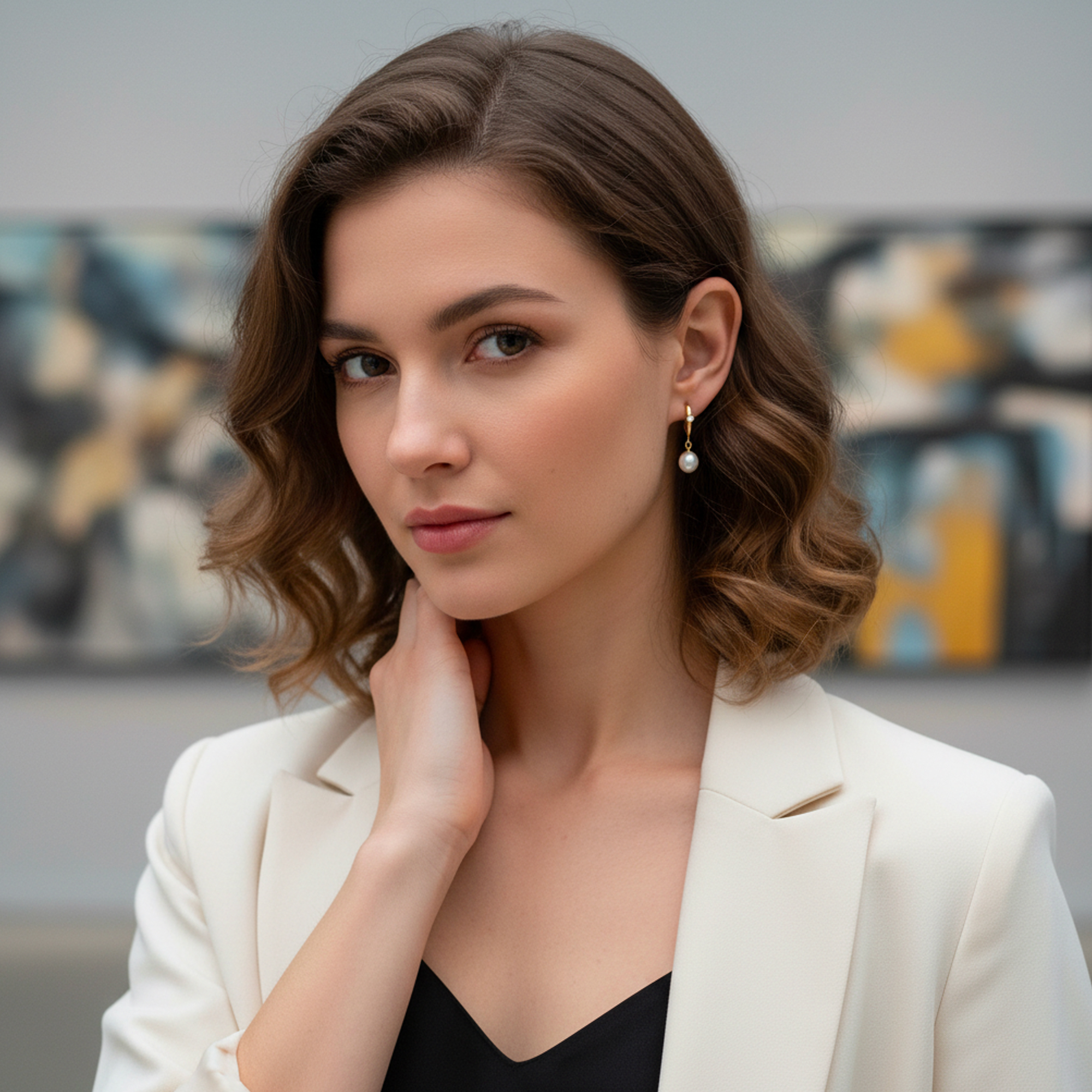
Threader earrings go best with fall layers because the thin chain sits at ear level, clear of knit collars, scarves, and jacket zippers. A threader earring is a fine chain or bar that slides through the piercing and hangs on both sides of the earlobe, creating a clean vertical line.
The style is having a moment. According to WhoWhatWear (2026), threader earrings are a minimalist jewelry trend moving from red carpets into everyday styling, and lightweight thread-through designs are overtaking chunky statement hoops as the versatile day-to-night choice. There is also a practical reason beyond trend. According to BlueStone (2026), threader earrings flatter round face shapes because the long vertical line visually lengthens the ear and face, which is helpful when a high turtleneck or a thick scarf shortens the neckline.
Use these criteria before choosing any fall earring:
Metal grade: BlueStone (2026) positions 18K gold, stamped with the 750 hallmark, as the daily-wear standard because it holds up better against tarnish than lower-karat or unplated options.
Base and skin comfort: nickel-free, lead-free construction and a 925 sterling silver base are rising purchase criteria for people wary of cheap plating that fades.
Length versus collar: shorter drops for turtlenecks and high collars, longer drops for open necklines and coats worn open.
Tone versus palette: warm gold lifts cobalt blue, purple, and scarlet without clashing.
The myth worth checking is that a necklace is the default fall accessory. Across this series, necklaces were the piece that caused nearly every snag, while earrings stayed out of the way through every layer change. The honest limit: a threader earring is a quiet accessory, so threaders are not for anyone who wants one bold statement piece, and long threaders can still brush a tall turtleneck collar, so pull the turtleneck on first. If an 18K gold plated threader fits those criteria, the detail worth checking for yourself is the chain length against the collars you actually wear.
How Do You Keep Gold-Plated Earrings From Fading in Fall?
Gold-plated earrings stay bright longest when they avoid water, perfume, lotion, and cleaning chemicals, according to multiple 2026 jewelry-care sources. In fall, the risk is less about the beach and more about hand cream, hair products, and damp scarves, so the routine needs to fit a layering morning.
Apply lotion, hair product, and perfume first, and let them dry before touching jewelry.
Pull on turtlenecks and knits over your head before putting in earrings.
Put earrings in last, after the scarf and coat are sorted.
Take earrings out first when you get home, before pulling anything over your head.
Wipe the earrings with a soft dry cloth if a damp scarf or rain touched them.
Store each pair flat and separated in a dry pouch, away from bathroom humidity.
Rule 3, "last on, first off," is the same rule Episode 1 used for necklaces. Earrings simply make following that rule easier, because nothing has to thread through a collar.
The Fall Layering Checklist: Run It in 3 Minutes
The fall layering checklist below condenses all five earlier episodes into lines you can tick off before leaving the house. Screenshot it or pin it next to the mirror.
[ ] Checked the morning low and the afternoon high, not just the current temperature.
[ ] Picked the layer count from the temperature table.
[ ] Base layer is breathable enough for the afternoon high.
[ ] Mid layer comes off without going over my head, or jewelry goes on after it.
[ ] Outer layer is light enough to carry if the day warms up.
[ ] One trend color (cobalt, purple, scarlet) at most, so the outfit stays focused.
[ ] Delicate chains are off loose, fuzzy knits.
[ ] Earring length clears the collar I'm wearing today.
[ ] Perfume and lotion are dry before jewelry goes on.
[ ] Jewelry goes in last and comes out first.
Frequently Asked Questions
How do you put on threader earrings without pulling your ear?
Threader earrings go on most comfortably when you feed the thin post straight through the piercing at the same angle as the hole, then let the chain drop slowly by its own weight. Holding the earlobe gently with the other hand keeps the threader earring from tugging or stretching the piercing.
Are threader earrings good for everyday wear?
Threader earrings suit everyday wear because the design is light and minimal, and WhoWhatWear (2026) notes the style moving from red carpets into daily outfits. Threader earrings also sit at ear level, so threader earrings avoid most of the sweater and scarf snags that fine necklaces run into during fall layering.
Do 18K gold plated earrings tarnish?
18K gold plated earrings can fade over time, and the main triggers are water, perfume, lotion, and cleaning chemicals, according to multiple 2026 jewelry-care sources. Taking 18K gold plated earrings off before showering, spraying perfume before putting them on, and storing them dry noticeably extends how long the gold finish stays bright.
What face shape do threader earrings suit best?
Threader earrings are most often recommended for round face shapes. According to BlueStone (2026), the long vertical line of a threader earring visually lengthens the ear and face, which balances rounder proportions. Oval and heart-shaped faces can also wear threader earrings easily, especially in shorter drop lengths.
How should I store threader earrings so they don't tangle?
Threader earrings stay untangled when each pair is stored flat and separated, ideally hooked through a small card or laid in its own compartment. Keeping threader earrings in a dry, closed pouch away from bathroom humidity also protects the gold plating from moisture between wears.
What should I wear when it's 60 degrees in fall?
A 60-degree fall day calls for two layers: a breathable base such as a tee or thin knit, plus a light jacket, trench, or cardigan you can remove by afternoon. At 60 degrees, a scarf is optional, and ear-level jewelry is easier than a long necklace when jackets go on and off.
Fall layering comes down to two habits from this series: dress for the temperature band, and keep jewelry where the layers cannot reach it. The cheat sheet handles the first habit, and a pair of 18K gold plated threader earrings handles the second for anyone who wants one quiet, warm-toned finish that works with cobalt, purple, or a camel coat. Before deciding, the most useful thing to look at is how other people describe wearing threaders every day through sweater season.
The whole series (EP 1-5)
That closes “가을에 어울리는 코디는?”. The next series is “BEFORE YOU GIFT IT”.

Comments