


18K Gold Plated Mother of Pearl Earrings: Old Money Guide
- hello488208
- 9 hours ago
- 7 min read
Disclosure: This post contains affiliate links. We may earn a commission at no additional cost to you if you make a purchase through these links.
18K Gold Plated Mother of Pearl Earrings: The Old Money Detail That Actually Holds Up
The short answer: a well-made pair of 18K gold plated mother of pearl earrings gets you the buttery glow and heirloom look of the old money aesthetic without the cost of solid gold, as long as you know what "18KGP" actually promises and how to care for it. The plating quality and the natural iridescence of the shell are doing all the work here — get those two details right, and the rest of the look follows. Below is what those details mean in practice, plus how to keep the earrings looking expensive for years instead of months.
What the "18KGP" Stamp Actually Means
The 18kgp stamp meaning is simpler than it looks: "GP" stands for gold plated, and "18K" refers to the purity of the gold layer applied to the surface, not the purity of the piece as a whole. That distinction matters because gold plating, gold vermeil, gold filled, and solid gold are four genuinely different products dressed up in similar marketing language. Gold vermeil requires a sterling silver base coated with at least 2.5 microns of gold at a minimum of 10K purity, which is a meaningful legal standard in the US. Standard gold-plated jewelry, by contrast, is usually brass or steel dipped in a layer of gold that can be as thin as 0.5 microns, which is why cheaper plated pieces wear through so much faster than vermeil. Neither is "fake" gold exactly, but the base metal and the plating thickness are what separate a piece that photographs like solid 18K from one that visibly thins out at the edges within weeks.
For anyone shopping specifically for old money earrings, this is the detail worth checking before checkout, not after. A listing that specifies the base metal, the plating thickness, and the plating method is signaling that the brand expects the piece to be inspected closely — which is exactly the kind of quiet confidence the old money aesthetic is built on in the first place.
Why Mother of Pearl Reads as Old Money Instead of Costume Jewelry
Mother of pearl is nacre, the same iridescent material mollusks like oysters, abalone, and mussels secrete in alternating microscopic layers of aragonite, calcite, and organic binder to line their shells. It is distinct from an actual pearl, which forms as a solid nodule, and that distinction is exactly why mother of pearl jewelry can deliver a similar glow at a fraction of the price. Major sourcing regions include the South Pacific, Japan, and Australia, and increasingly the industry is leaning on sustainability and responsible-harvesting standards across Southeast Asia and the Pacific Islands as demand for natural materials climbs.
The material also carries genuine historical weight, which is part of why it reads as old money jewelry rather than trend jewelry. Ancient Egyptian royalty used it in ceremonial and religious pieces, Mesopotamian craftsmen inlaid it into ceremonial objects, and Renaissance European nobility treated it as a status symbol centuries before "quiet luxury" was a phrase anyone used. That lineage is baked into the material itself — the soft, shifting shine doesn't need a logo or a statement size to communicate that it's substantial.
The Old Money and Quiet Luxury Connection
Search interest in old money and quiet luxury aesthetics has stayed strong heading into 2026, with the throughline being understated, logo-free pieces that mimic the warm glow of solid gold rather than anything flashy or overtly branded. Layered onto that is a broader shift back toward natural materials — mother of pearl, shell, and pearl accents paired with minimalist gold metalwork — which is exactly the combination that makes gold plated mother of pearl earrings feel current rather than dated. Notably, general searches for generic "gold-plated earrings" have stayed relatively flat, while searches for specific quality signals — material composition, plating thickness, hypoallergenic claims — have grown. That shift suggests shoppers are getting more educated and more skeptical, looking past the marketing copy to the actual specs before they buy.
How Long Does the Gold Plating Actually Last?
Plating longevity comes down almost entirely to thickness and application method. High-quality gold-plated pieces, properly cared for, typically hold their finish anywhere from 6 months to 2 years, while cheaply plated jewelry can start visibly fading within 2 to 3 months of regular wear. Pieces finished with vacuum plasma plating, a more advanced deposition process, tend to outperform both, often holding their shine well beyond the one-year mark. In practice, that means the earrings you wear a few times a week should still look sharp deep into the following season if the plating was done right — if a pair starts thinning out after a handful of wears, that's a plating problem, not a normal-wear problem.
One frequently reported issue is skin discoloration — a greenish or blackish tint appearing where the earring contacts skin. This happens when the thin gold layer wears through and the base metal underneath, often copper or brass, oxidizes on contact with sweat, lotion, or perfume. It looks alarming but is almost always harmless and washes off the skin easily; it's also a useful early signal that the plating in that spot has worn thin and the piece may need a break from daily wear.
Symbolic Charms That Complete the Old Money Look
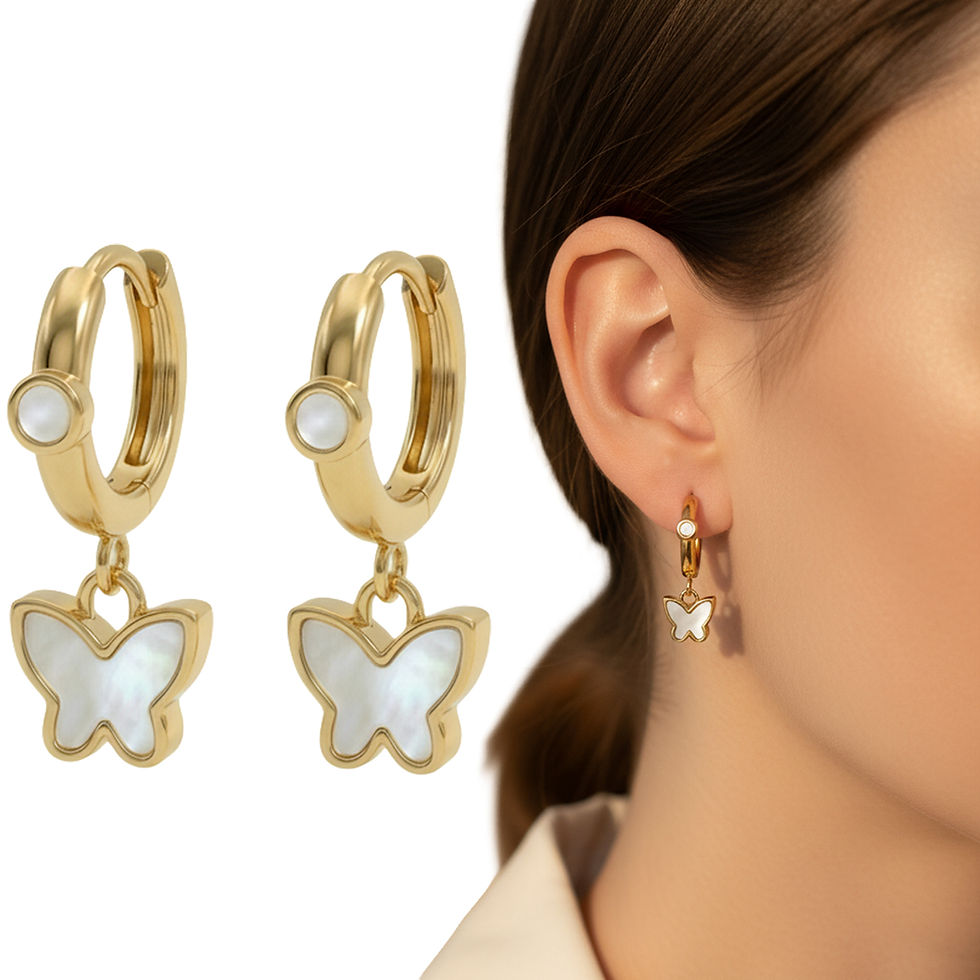
Part of what makes mother of pearl jewelry old money look land is the pairing of a natural material with a small, meaningful motif rather than an oversized logo or statement charm. A heart shape reads as classic and romantic without trying too hard, which makes it an easy everyday choice for anyone building a quiet luxury earring rotation. The Leporem Heart Earrings pair a mother of pearl inlay with an 18K gold plated finish in exactly that understated silhouette, making them a natural pick for someone who wants a sentimental detail that still looks polished enough for daily wear. Shop the Heart Earrings → A butterfly motif carries its own layer of meaning, symbolizing transformation and renewal, and it's become a recurring shape across current mother of pearl huggie and hoop lines for exactly that reason. If you're drawn to a charm with a bit more personal symbolism, the Leporem Butterfly Earrings bring that motif into the same gold plated mother of pearl format, so the shape adds meaning without disrupting the minimalist look. Shop the Butterfly Earrings → A four-leaf clover is the third recurring symbol in this space, traditionally standing in for luck, and it tends to work especially well as a small huggie-style earring that stays close to the ear. The Leporem Clover Earrings follow that same approach, giving the old money silhouette a subtle good-luck detail that still reads as effortless rather than themed. Shop the Clover Earrings → Across all three, the shared logic is the same: a small symbolic charm, a natural iridescent material, and a gold finish that doesn't announce itself — which is the entire point of the aesthetic.
Is It Hypoallergenic? What to Know About Sensitive Ears
Most gold plated mother of pearl earrings, including pieces built on a 316L surgical stainless steel base, are marketed as hypoallergenic, and for most wearers that holds true — 316L is corrosion-resistant and widely tolerated. It's worth knowing, though, that 316L stainless steel is not technically 100% nickel-free the way niobium or titanium are, since it's an alloy that contains a small amount of nickel bound into the steel matrix. For the vast majority of people, including many with mild sensitivities, that distinction never becomes an issue in daily wear. But if you have a diagnosed nickel allergy, it's worth knowing the difference between "hypoallergenic" and "nickel-free" before you buy, rather than assuming the two terms mean exactly the same thing.
Caring for Gold Plated Mother of Pearl Earrings
Care habits matter as much as the quality of the piece itself when it comes to how long that gold finish and shell inlay stay looking new. A few habits make an outsized difference:
Remove before water exposure. Take earrings off before swimming, showering, or hot tubs — chlorine and prolonged moisture accelerate plating wear and can dull the shell's natural iridescence.
Apply products first, jewelry last. Put on perfume, lotion, and hairspray before putting in earrings, not after, since those products are a major contributor to plating breakdown and skin discoloration.
Clean gently. Wipe with a soft, damp cloth and mild soap only — skip ultrasonic cleaners, abrasive polishes, and harsh chemicals, which can strip plating or damage the shell.
Store thoughtfully. Keep pieces in a cool, dry, fabric-lined box away from direct sunlight and humidity to prevent tarnish and premature fading.
None of this requires special equipment or much extra time — it's mostly a matter of sequencing your routine so lotion and perfume go on before the jewelry, not after.
Getting the Old Money Look Without the Old Money Price Tag
Affordable old money jewelry works best when you treat it as a materials decision rather than a style decision. A vermeil or high-quality plated piece in mother of pearl, worn and stored correctly, can realistically deliver the same visual effect as a solid gold heirloom for a small fraction of the cost, especially once you factor in that even fine jewelry needs occasional professional cleaning and re-polishing over time. The goal isn't to fool anyone into thinking a piece is solid 18K — it's to choose a quiet luxury earring that doesn't call attention to what it cost, which is the actual spirit of the aesthetic in the first place.
Frequently Asked Questions
What is the difference between gold plated, gold vermeil, and solid gold jewelry?
Gold plating is a thin layer of gold, sometimes under 0.5 microns, applied over a base metal like brass or steel. Gold vermeil is a step up, requiring a sterling silver base with at least 2.5 microns of gold at a minimum of 10K purity. Solid gold has no base metal at all — the entire piece is the stated karat throughout.
Does gold-plated jewelry turn skin green or black?
It can, once the thin gold layer wears through and the base metal underneath, often copper or brass, oxidizes from contact with sweat, lotion, or perfume. This reaction is common, generally harmless, and washes off the skin with soap and water.
How long does 18K gold plating actually last?
High-quality plating typically lasts 6 months to 2 years with proper care, while lower-quality plating can fade within 2 to 3 months. Pieces finished with vacuum plasma plating tend to hold their shine longest, often beyond a full year.
Is mother of pearl the same thing as a pearl?
No. Mother of pearl is nacre, the iridescent lining inside mollusk shells, while a pearl is a solid nodule the mollusk forms separately. Because it's more abundant, mother of pearl is significantly more affordable while still offering a similar iridescent shine.
Are gold plated mother of pearl earrings safe for sensitive ears?
Most are built on 316L surgical stainless steel, which is corrosion-resistant and widely considered hypoallergenic, though it is not technically 100% nickel-free like titanium or niobium. For most wearers, including those with mild sensitivities, this poses no issue, but anyone with a diagnosed nickel allergy should check the base metal specifically.


Comments