


Lace vs Mesh Thong: Which Is Better for Everyday Wear?
This post contains links to our own Amazon store.
📚 THINGS WOMEN NOTICE · EP 02
If you're weighing a lace vs mesh thong for daily wear under leggings and work pants, mesh is usually the better pick: it's thinner, smoother, and shows fewer lines. The bigger factor isn't the body fabric at all, though. A cotton gusset decides how comfortable either thong feels by the end of the day.
Sheer mesh can look too delicate to be practical, but comfort comes from what sits against you where moisture builds up, not from how opaque the fabric is. A sheer mesh body paired with a cotton-lined gusset gives you a light, stretchy outer layer and an absorbent lining underneath. Washing it gently in cool water by hand, or in a laundry net, keeps fine mesh from snagging.
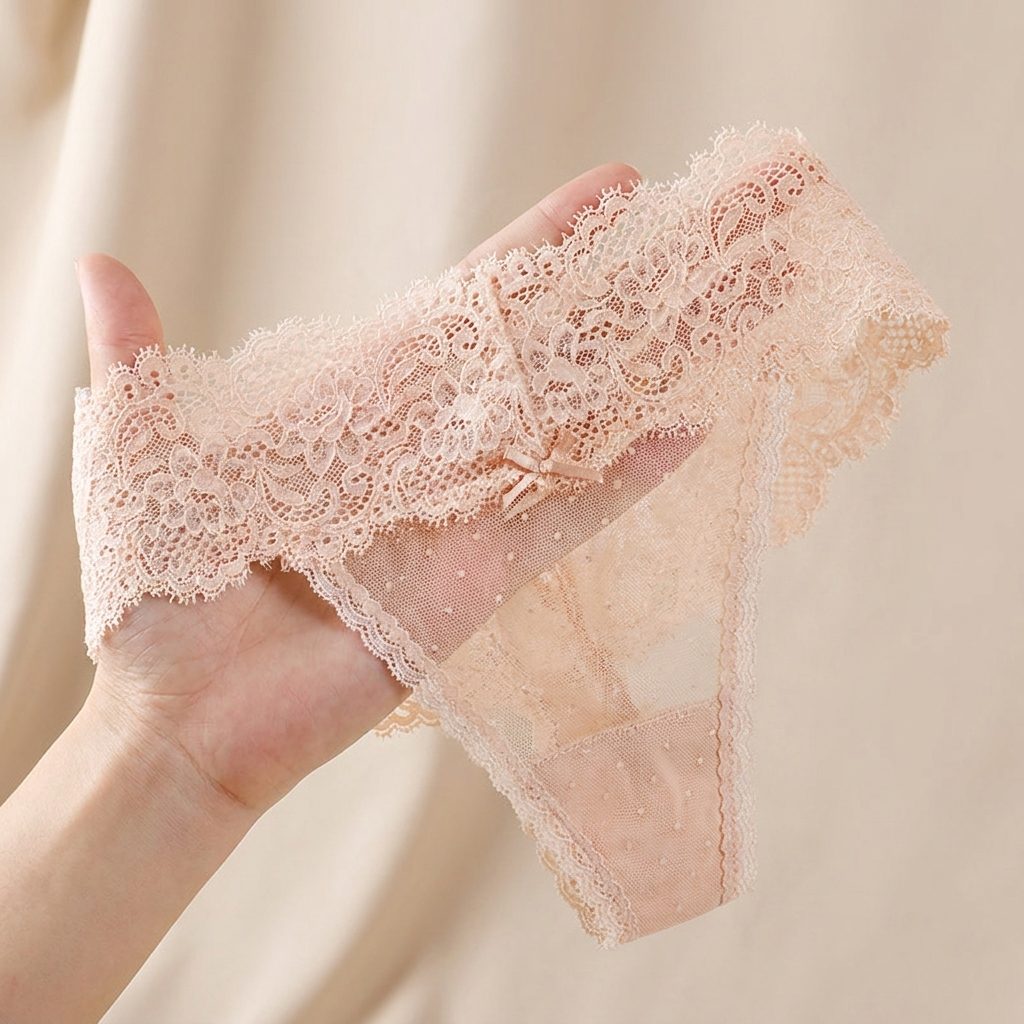
Breathable where it counts: a cotton-lined gusset under a light sheer mesh body.
Four days covered between laundry loads: the 4-pack comes in 2 Champagne Nude and 2 Dusty Pink.
Fewer lines under fitted clothes: a high-cut, no-show G-string shape.
Before you decide, check the gusset in close-up product photos and see how the lining is placed. You can look at it yourself here:
Key Takeaways
Mesh is the comfort-and-invisibility option, and lace is the decorative, textured option, according to Lemonade Dolls (2025).
A cotton or bamboo gusset matters more for daily breathability than whether the body is lace or mesh, per Hanky Panky and Lemonade Dolls (2025).
Soft stretch lace with flat edges feels much smoother than rigid decorative lace, so not all lace thongs are equal, according to Well+Good (2025).
Thongs offer minimal coverage and may not suit everyone every day, per ThirdLove and Victoria's Secret PINK (2025).
No clinical study directly compares lace and mesh thongs, so treat fabric advice as general guidance, not medical advice.
What Is the Difference Between a Lace and Mesh Thong?
A lace thong uses an openwork decorative fabric, often floral, for the front panel or waistband. A mesh thong uses a fine, uniform knit, usually nylon and spandex, that is thin, stretchy and smooth. Both fabrics can be sheer. The real differences show up in texture, edge feel and how each fabric behaves under fitted clothes.
A thong gusset is the small lined panel at the crotch, and the gusset is the single most important comfort feature in any thong. Underwear shoppers tend to compare the visible fabric and skip the lining. That's the mistake this guide is built to fix. Every section below comes back to the same test: does the fabric feel fine at hour ten, and does the gusset do its job?
Lace vs Mesh Thong: Side-by-Side Comparison for Daily Wear
A lace vs mesh thong comparison comes down to six practical factors: texture against skin, breathability, lines under clothes, drying, durability in the wash and the best occasion for each. The table below lines those factors up, with a column for the Leporem sheer mesh pack filled in only from its listed features.
Factor | Lace thong | Mesh thong | Leporem Sheer Mesh 4-Pack |
|---|---|---|---|
Texture | Raised pattern; soft stretch lace is smooth, rigid lace can feel scratchy | Flat, uniform, smooth | Sheer mesh body |
Breathability | Depends on the gusset | Open knit lets air through; still depends on the gusset | Cotton-lined gusset |
Lines under leggings | Pattern and thicker edges can show | Thin fabric shows less | High-cut, no-show G-string shape |
Drying | Denser, layered lace tends to hold water longer | Thin knit tends to dry faster | Mesh body |
Washing | Snags easily; hand wash or laundry net | Can snag; hand wash or laundry net | Gentle care recommended for fine mesh |
Colors for daily rotation | Varies | Varies | 2 Champagne Nude + 2 Dusty Pink |
Best for | Days when texture matters more than invisibility | Everyday wear under fitted clothes | Daily rotation under leggings and work pants |
Mesh wins most daily-wear rows, and lace wins on decorative detail. If a friend of yours keeps returning thongs that feel scratchy by lunch, this table is the part to send her.
Which Is More Breathable, Lace or Mesh Panties?
Mesh panties are usually more breathable than lace panties across the body because mesh is a thin, open knit. Retailer guides from Hanky Panky and Lemonade Dolls (2025), however, say the cotton or bamboo gusset matters more for everyday breathability than the body fabric. A lace thong with a cotton gusset can outperform a mesh thong without one.
Moisture builds up at the gusset, not at the waistband, which is why the lining does more work than the outer layer. Synthetic fabric on its own holds dampness against the skin. A cotton lining absorbs it. On a long day of commuting and sitting, that's the difference between forgetting you're wearing a thong and counting the hours until you can change.
Fabric blends matter too. The AdoreMe fabric guide (2025) recommends cotton blends with a little stretch, because a small amount of elastane helps fabric keep its shape without feeling restrictive. Breathable alternatives such as modal and bamboo show up in the same conversations, but the lining rule stays the same whatever the body fabric is.
Types of Lace Thongs: Does Lace Feel Scratchy?
Lace thongs feel scratchy only when the lace is rigid or the edges are thick. According to Well+Good (2025), soft stretch lace with flat edges feels much smoother than stiff decorative lace. The specific lace matters more than the category, so two lace thongs can feel completely different after a full workday.
The common types of lace thongs fall into three groups:
Stretch lace: soft, elastic and flat. Stretch lace is the most wearable lace for longer days.
Rigid or embroidered lace: structured and textured. Rigid lace is the most likely to rub at seams.
Lace-trim styles: a smooth body with lace only at the waistband. Lace-trim styles are a middle ground, but the trim can show under thin fabric.
Mesh skips the guesswork. A fine mesh knit has no raised pattern to catch on fabric or skin, which is why Lemonade Dolls (2025) frames mesh as the comfort-and-invisibility option. Lace earns its place on days when you'd like decorative texture and aren't wearing anything fitted over it.
What Thong Doesn't Show Lines Under Leggings?
The thong that shows the fewest lines under leggings is a no-show style in thin, stretchy mesh with smooth, flat edges. Visible panty lines, often called VPL, come from thick seams, raised patterns and elastic that presses into fitted fabric. A high-cut leg sits away from the widest part of the hip, so edges stay flatter.
No-show, seamless underwear sold in multi-packs is one of the clearest current trends, aimed at tight pants, leggings and dresses. Color plays a role as well. A neutral tone close to your own skin tone is less likely to show through light or thin fabrics, which is why a Champagne Nude pair is handy under pale leggings, while Dusty Pink gives you a second shade in the rotation.
A quick at-home check helps here. Put on your thinnest pair of leggings, stand in daylight in front of a mirror, and compare one lace and one mesh thong. Most people see the waistband and leg edges first. Smooth, flat edges pass the test, and raised lace edges usually don't.
Is It OK to Wear a Thong Every Day?
Wearing a thong every day is fine for many people, but thongs offer minimal coverage, and guides from ThirdLove and Victoria's Secret PINK (2025) note that thongs may not suit every day for everyone. A cotton gusset, a correct size and a fresh pair daily make the biggest difference. Recurring irritation means it's time to see a clinician.
No clinical gynecology or dermatology source directly compares lace and mesh thongs, and that gap is worth saying plainly. Everything in this guide is general fabric guidance, not medical advice. If you deal with repeated irritation, itching or infections, a change of underwear fabric is not a substitute for a clinician's advice, and a fuller-coverage cotton brief may suit you better on some days.
Fit matters as much as fabric. A thong that's too small pulls the back string tight and shifts the gusset out of place. A thong that's too loose moves around and rubs. Check the size chart against your hip measurement rather than guessing from another brand's sizing, and look for fabric with good stretch recovery so the fit holds through the day.
How Many Thongs Should You Rotate, and How Do You Wash Them?
A daily thong rotation needs at least one pair for every day between laundry loads, plus a spare. A 4-pack covers four days, so weekly washers typically need two packs. Rotating evenly lets elastic rest between wears, and gentle washing protects fine mesh and lace from snags and stretched-out edges.
Use this checklist to build a rotation that lasts:
Count your laundry gap. Wash every 4 days? One 4-pack covers it. Wash weekly? Plan on 8 pairs or more.
Check the gusset first. Every daily pair should have a cotton or bamboo lining.
Wash gently. Hand wash in cool water, or use a laundry net on a delicate cycle so hooks and zippers on other clothes can't snag the fabric.
Skip the dryer. Lay pairs flat to dry. High heat breaks down elastic faster.
Rotate evenly. Wear pairs in order instead of reaching for the same favorite every time.
Replace on signs, not dates. Retire a pair when the waistband stops springing back, the edges curl, or the gusset looks thin.
Multi-packs aimed at daily rotation are a growing trend for exactly this reason. A cotton-lined sheer mesh 4-pack in two neutral shades makes the first step of the checklist simple, since four matching pairs cover four days without extra decisions. If you're working out whether one pack or two fits your laundry routine, it helps to see the current price before you count:
Who Should Choose a Lace Thong Instead?
A lace thong is the better choice for people who want decorative texture, wear looser clothing, or reach for a thong only occasionally rather than daily. Soft stretch lace with a cotton gusset can be comfortable for a full day, too. For everyday wear under leggings and fitted pants, though, mesh remains the more practical fabric.
The Leporem sheer mesh pack isn't for everyone. If you'd like decorative lace detail, fuller rear coverage, or a style you'll wear only a couple of times a month, a sheer mesh G-string 4-pack is not the right fit. The pack is designed for people who want a light, low-line daily option with a cotton-lined gusset and enough pairs to rotate.
Frequently Asked Questions
Is a lace or mesh thong better for everyday wear?
A mesh thong is usually better for everyday wear than a lace thong. Mesh is thinner and smoother, so it shows fewer lines under leggings and tends to dry faster. Lace fits occasions when texture matters more than invisibility. For either fabric, a cotton gusset matters more than the body material.
Are thongs bad to wear every day?
Thongs are not automatically bad to wear every day, but thongs offer minimal coverage and do not suit everyone daily. A thong with a cotton gusset, a correct size and a fresh pair each day is the sensible baseline. Anyone with recurring irritation or infections should see a clinician rather than relying on fabric changes.
Does a thong need a cotton gusset?
A thong does not strictly need a cotton gusset, but a cotton gusset is the most useful feature for daily wear. Retailer guides from Hanky Panky and Lemonade Dolls (2025) rank the gusset above the lace-or-mesh choice for breathability. A cotton or bamboo lining handles moisture better than synthetic fabric alone.
Is a mesh thong breathable?
A mesh thong is breathable because mesh is an open, lightweight knit that lets air move through the fabric. Breathability depends most on the gusset, though. A sheer mesh thong with a cotton-lined gusset combines an airy body with an absorbent lining, which is the hybrid that current everyday underwear trends favor.
What thong doesn't show lines under leggings?
A no-show thong in thin, stretchy mesh with flat, smooth edges shows the fewest lines under leggings. A high-cut leg sits away from the widest part of the hip, which keeps edges from pressing into fitted fabric. Choose a neutral tone close to your skin tone for light-colored or thin leggings.
How many thongs do I need for daily rotation?
A daily thong rotation needs at least one pair per day between laundry loads, plus a spare or two. A 4-pack covers four days, so most people who wash weekly pair two 4-packs. Rotating evenly lets elastic rest between wears, and gentle washing helps every pair keep its stretch longer.
The lace vs mesh thong question has a practical answer for daily wear: choose mesh for smoothness and fewer lines, choose lace for texture, and never skip the cotton gusset. A sheer mesh 4-pack with a cotton-lined gusset in Champagne Nude and Dusty Pink fits that everyday checklist. The last thing worth checking is how buyers describe the fit and sizing in practice:
More in this series
EP 3 is “How to pick underwear size: 5 checks before you buy”. Subscribe so it reaches you first.
Not sure which size to order? We put every underwear and jewelry measurement into one free Fit & Size Guide (PDF). Pop your email into the box at the bottom of this page and it will land in your inbox. You can also check the panty size chart right now.


Comments