


Can You Put Panties in the Dryer? Cotton vs Lace vs Nylon
This post contains links to our own Amazon store.
📚 LINGERIE CARE BASICS · EP 04
Can you put panties in the dryer? Usually yes, on low or delicate heat, but every hot cycle quietly wears down the elastic that keeps the waistband snug. If your favorite pair suddenly sags at the band, the dryer is the usual suspect. The full answer depends on fabric: cotton, lace and nylon mesh each handle heat differently.
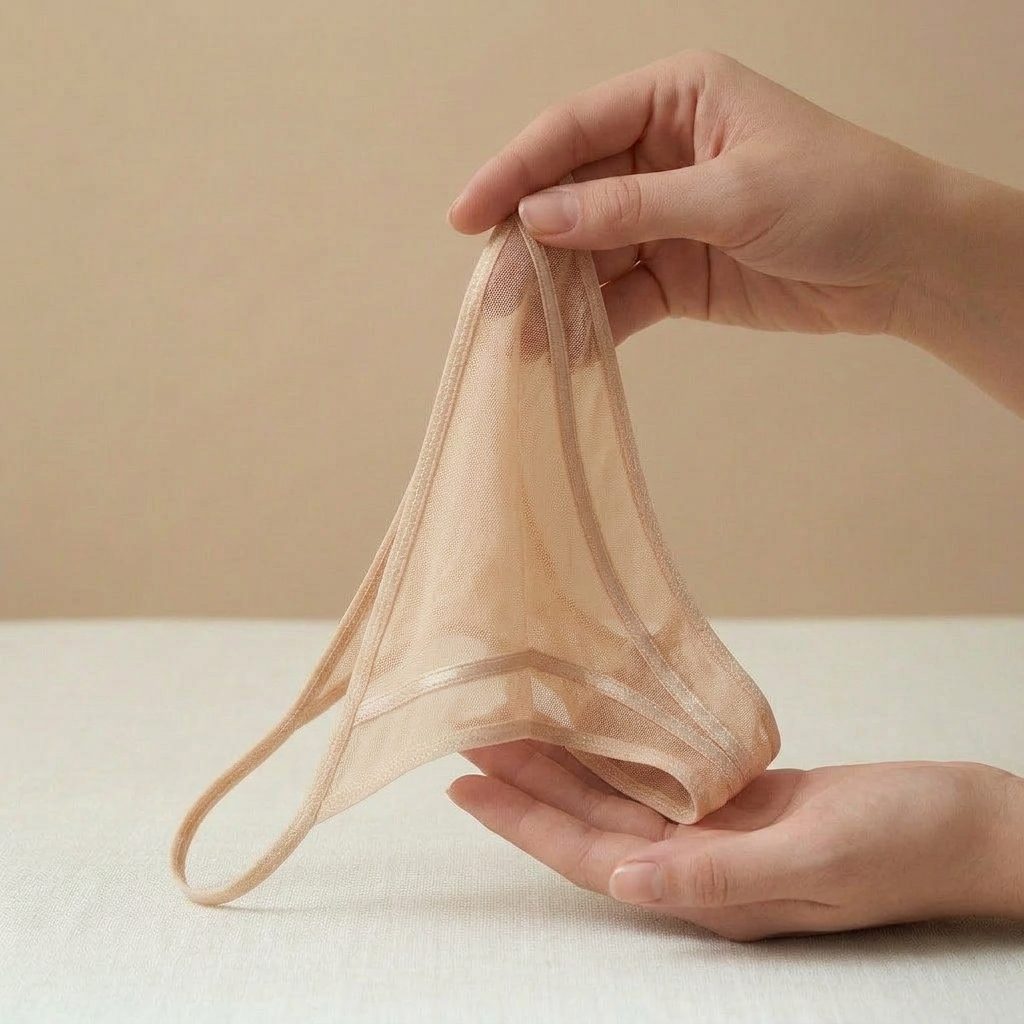
Sheer mesh is the fabric people worry about most, both on laundry day and in everyday wear. A cotton-lined gusset handles the comfort side, because the layer that sits against skin is breathable cotton rather than synthetic mesh. The care side is simple too: wash cold in a mesh laundry bag, skip the softener and lay the pair flat, since thin mesh dries quickly on a rack without any dryer heat at all.
Breathable where it counts: a cotton-lined gusset, so cotton, not mesh, sits against skin.
Easy to rotate without the dryer: four pairs per pack, so each pair can air dry fully before its next wear.
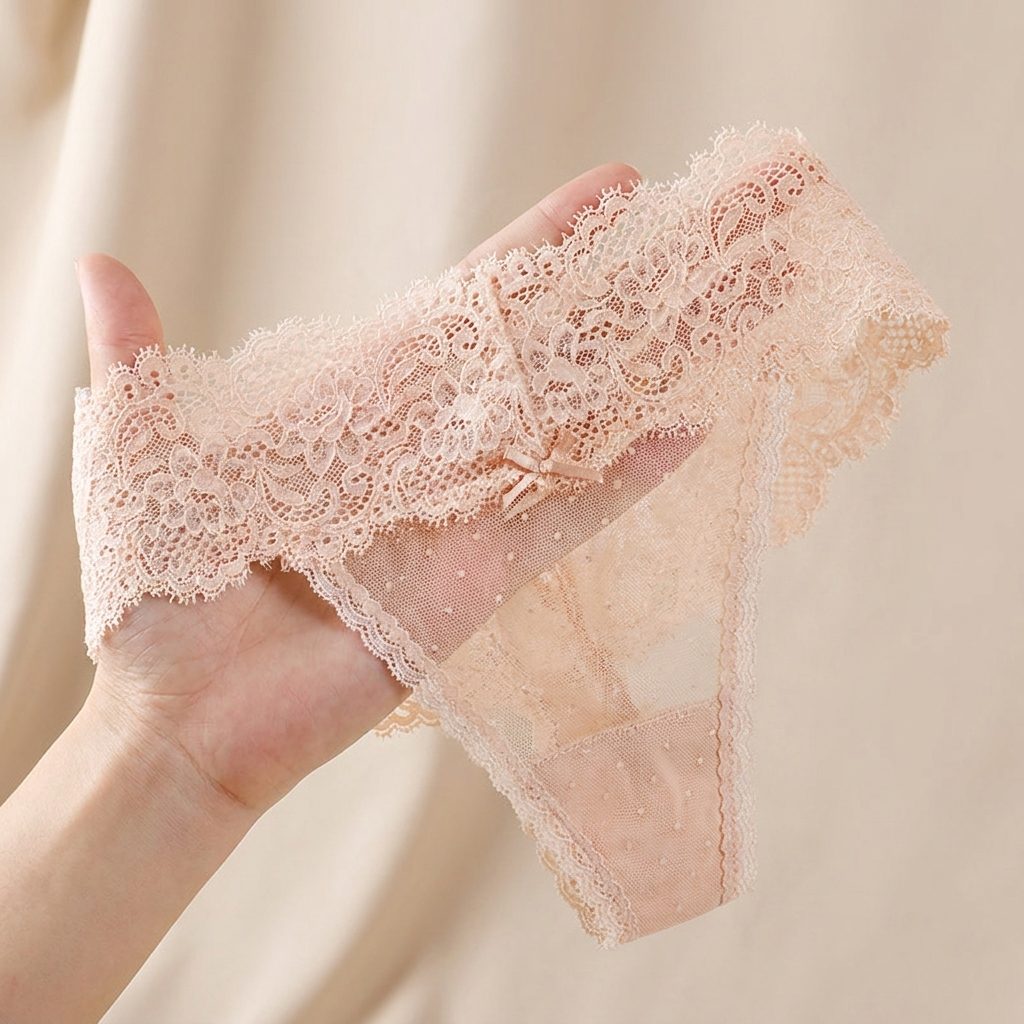
Two quiet shades: 2 Champagne Nude and 2 Dusty Pink, neutral tones that work under most everyday outfits.
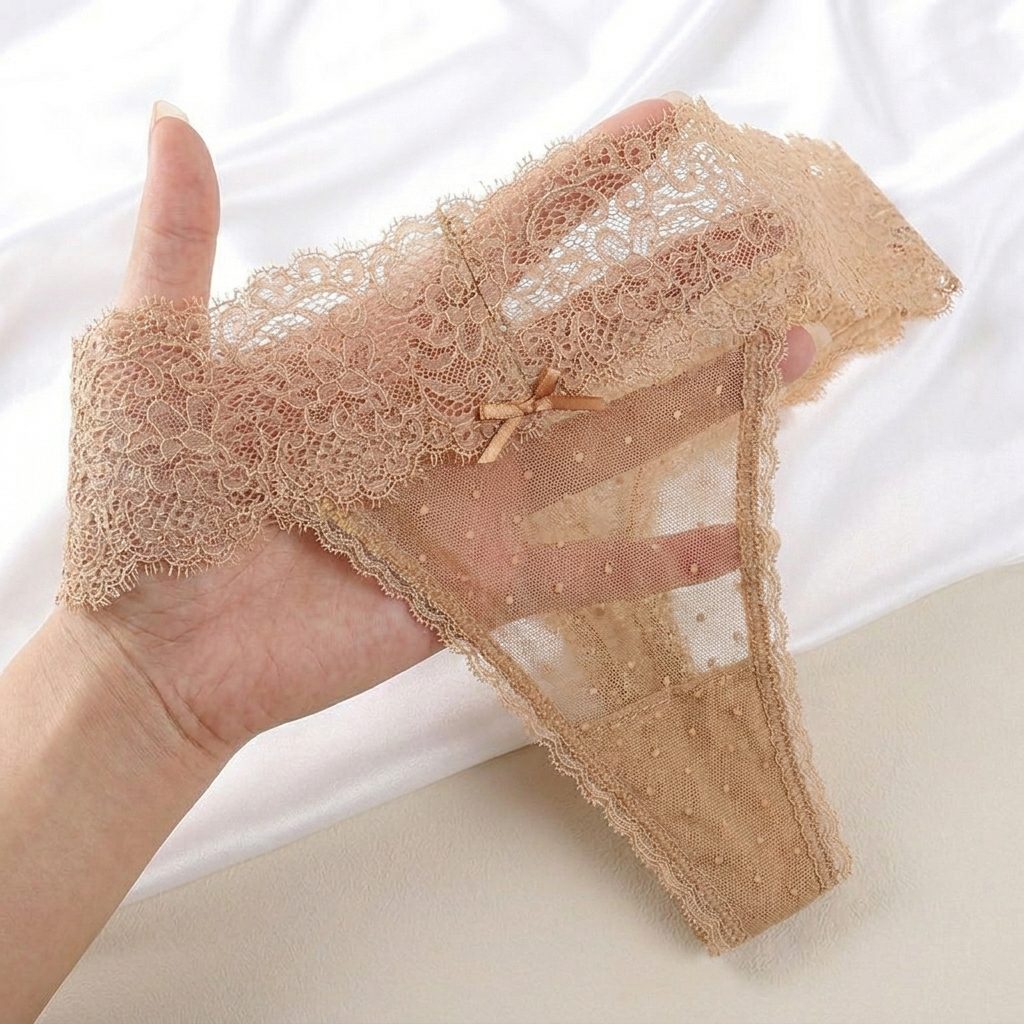
The Leporem Sheer Mesh Thongs for Women 4 Pack High Cut No Show Cotton G-String are built for exactly this kind of air-dry routine. The product page shows the gusset lining and both shades in close-up photos, along with today's price.
Key Takeaways
Heat, not washing, is the main enemy of underwear elastic, and the damage builds over many cycles rather than showing after one.
Consumer fabric-care guides from Wooter and Plasticranger (2025-2026) put the danger zone for elastane at roughly 60°C (140°F) and describe the damage as irreversible.
Cotton-spandex briefs tolerate a low-heat cycle best, while lace and nylon mesh with thin elastic edges should air dry.
Wash at 30°C (86°F) or below, skip fabric softener, and pull anything out of the dryer while it is still slightly damp.
The care label is the final word on whether a specific pair can go in the dryer.
What Is Elastane, and Why Does Dryer Heat Hurt It?
Elastane, also called spandex and sold under Invista's Lycra brand, is the synthetic fiber that lets underwear stretch and snap back. Dryer heat weakens that snap-back, which fabric experts call recovery. According to House Digest and The List, repeated hot cycles gradually wear down stretch and recovery, and a single cycle may show no visible damage at all.
Invisible, gradual damage explains why a waistband seems to give out overnight. The fiber has been losing recovery for months, and one day the band simply stops holding. Choice Australia adds that a higher spandex percentage makes heat damage more likely, and that polyester-elastane blends tolerate heat better than garments that lean heavily on elastane.
Several consumer fabric-care guides, including Wooter and Plasticranger (2025-2026), say dryer heat above roughly 60°C (140°F) can permanently damage elastane. Those guides are not lab sources, so treat 60°C as a cautious ceiling, not a safe target. Every source agrees on one point, though: once elastane loses its recovery, no wash, soak or trick brings it back.
Can You Put Panties in the Dryer? Cotton vs Lace vs Nylon Compared
Cotton-spandex panties are the most dryer-tolerant fabric and can usually handle a low-heat cycle. Lace panties, which are typically nylon (polyamide) blended with elastane, and sheer nylon mesh should air dry, because thin fabric and narrow elastic edges have little material to buffer heat. The care label always overrides these general rules.
Feature | Cotton-spandex | Lace (nylon + elastane) | Sheer nylon mesh | Leporem Sheer Mesh Thong 4-Pack |
|---|---|---|---|---|
Typical build | Mostly cotton, small elastane share | Polyamide lace with elastane | Fine synthetic mesh, thin edges | Sheer mesh with a cotton-lined gusset |
Dryer verdict | Low or delicate heat usually OK | Air dry | Air dry | Follow the care label; air drying protects the edges |
Weak point | Waistband after many hot cycles | Scalloped edges and stretch lace | Thin bound edges that roll | High-cut edges, like any mesh thong |
Best routine | Cold wash, low heat, remove damp | Hand wash or mesh bag, lay flat | Mesh bag, cold, lay flat | Cold wash in a mesh bag, lay flat |
Elastane share matters more than the fabric's name. Knix and Undiemeister (2025) note that blends with 5% spandex or less may survive a low-heat cycle without visible damage, but that the damage still accumulates. For comparison, Leporem's flower lace strappy thong 4-pack is 90% polyamide and 10% elastane, double that threshold, which is why its care instructions recommend hand washing, or a mesh bag on a delicate cycle at 30°C maximum.
Can you put knickers in the dryer?
Knickers, the British word for panties, follow exactly the same rules. Cotton-spandex knickers can usually take low heat, while lace and mesh knickers belong on a drying rack.
Why Thin Edges Stretch Faster Than Wide Waistbands
Thin elastic edges show heat damage sooner than wide waistbands, a difference most laundry articles skip. A wide band on a cotton brief has more elastic spread across a larger surface, so a small loss of recovery hides inside the overall grip. A thong, mesh or no-show style relies on a narrow bound edge, and the same small loss shows up right away as rolling, gapping or a wavy line.
Seamless and no-show styles have become popular for good reason, but they reward careful drying more than any other cut. If you own both cotton briefs and mesh thongs, the briefs can go in the low-heat load and the thongs should not.
How Do You Dry Underwear Without Ruining the Elastic?
The best way to dry underwear without ruining the elastic is to skip heat entirely: wash cold, press the water out in a towel, and lay each pair flat or hang it without pulling the waistband. Thin fabrics air dry within hours, and the band keeps its stretch because it never meets heat.
Shinesty, Expert Reviews UK and Bounce (2025) all recommend nearly the same routine, so it works as a checklist worth saving:
Read the care label first. The label is the final authority on dryer use.
Wash at 30°C (86°F) or below in a mesh laundry bag, especially for lace and mesh.
Skip fabric softener. A mild detergent is enough.
Roll each pair in a dry towel and press, never wring, to remove excess water.
Lay flat or hang by the gusset so the waistband isn't stretched by its own weight.
If you must use a dryer, choose low or delicate heat and take the pair out while still slightly damp.
If you must use the dryer: a low-heat protocol for heat-pump dryers
Heat-pump dryers from brands like LG and Samsung are now common in many homes, and their low-temperature or delicate courses are gentler than a standard cotton cycle. Gentler still means heated, so the protocol stays the same:
Pick the low-temperature or delicate course, never the default cotton course.
Dry underwear with light items, not towels or jeans that stretch the cycle longer.
Use the shortest timed setting and remove pieces while slightly damp.
Finish on a rack, and keep thongs, lace and mesh out of the drum entirely.
If someone in your home runs every load on the default cotton course, this is the section to send them.
Is It the Dryer or Just Wear? Try a Two-Pair Band Test
A two-pair band test shows whether heat is stretching your underwear: take two identical pairs, air dry one and machine dry the other on low heat for a few weeks, then measure both waistbands lying flat. If the dryer pair measures longer at rest or no longer snaps back, heat is the cause, not normal wear.
Measure each relaxed waistband flat with a tape measure and write the number down.
Gently stretch each band and release it, noting how quickly it returns.
Dry pair A on a rack and pair B on your dryer's lowest setting every wash.
Re-measure every few weeks and compare length, snap-back and any rippling at the edges.
Multipacks make the test easy, because the pairs start out identical. A four-pack split into two shades lets you dry one color on the rack and the other in the dryer, so you never mix them up.
Who Sheer Mesh Thongs Are Right For, and Who Should Skip Them
Sheer mesh thongs suit people who already wash cold and air dry, or who are willing to start. Four pairs per pack means one set can rest on the rack while another is in rotation, so nothing has to be rushed through the dryer. On a busy week, the pair you reach for is fully dry instead of faintly damp at the gusset.
Sheer mesh thongs are not for anyone who wants to toss every load into one hot cycle with towels. If that is your routine, full-coverage cotton-spandex briefs fit it better. For everyone else, the deciding detail is the lining: a cotton-lined gusset keeps cotton at the point of contact while the mesh stays light and quick to dry. The Leporem Sheer Mesh Thongs for Women 4 Pack High Cut No Show Cotton G-String pairs that lining with high-cut mesh edges, and close-up photos show how the gusset is finished.
How Often Should You Replace Underwear?
Underwear should be replaced when the waistband fails the band test, the fabric thins or the gusset wears, rather than on a fixed calendar. Care decides how soon that happens. A pair that avoids heat keeps its recovery longer, which lowers its cost per wear and keeps it out of the trash sooner than it needs to be.
Cost per wear is the most useful way to think about underwear care. Two pairs bought on the same day can have very different lifespans depending on whether they spend their life in a hot drum or on a rack. For sustainability-minded readers, cold washing and air drying are the simplest ways to make one drawer last longer.
Frequently Asked Questions
Does the dryer ruin the elastic in underwear?
The dryer can ruin the elastic in underwear over time, because heat breaks down elastane's ability to snap back. One low-heat cycle rarely shows damage, but repeated hot cycles add up until the waistband sags or ripples. Air drying, or a short low-heat cycle with items removed while damp, protects underwear elastic best.
Can you fix stretched-out underwear elastic?
Stretched-out underwear elastic usually cannot be fixed once heat has damaged it, because fabric-care guides describe elastane heat damage as permanent. Hot water or another dryer cycle only weakens the fiber further. If a waistband no longer recovers during the band test, retire that pair and protect the rest with cold washes and air drying.
Is low heat OK for cotton spandex underwear?
Low heat is usually OK for cotton spandex underwear, especially blends with a small elastane share. Knix and Undiemeister (2025) note that blends with 5% spandex or less may survive a low-heat cycle without visible damage, but wear still accumulates. Remove cotton spandex underwear while slightly damp and finish it on a rack.
Can you dry thongs or mesh underwear in the dryer?
Thongs and mesh underwear are best kept out of the dryer. Thong and mesh styles rely on thin elastic edges, so even small heat damage shows quickly as rolling or gapping. Wash mesh thongs cold in a mesh laundry bag, press out water with a towel and lay them flat, because thin mesh air dries quickly.
Should you use fabric softener on underwear?
Fabric softener is best skipped for underwear. Care guides from Shinesty, Expert Reviews UK and Bounce (2025) list skipping softener alongside cold washing and air drying as the core routine for protecting elastic. A mild detergent alone is enough for underwear made with elastane, lace or mesh, and it keeps the routine simple.
Can you put knickers in the dryer?
Knickers follow the same rules as panties: cotton-spandex knickers can usually handle a low or delicate dryer setting, while lace, nylon and mesh knickers should air dry. Check the care label first, wash at 30°C (86°F) or below, and take any knickers out of the dryer while they are still slightly damp.
Building a drawer around air drying is the easiest way to keep elastic working, and thin, quick-drying styles make that routine painless. If the Leporem Sheer Mesh Thongs for Women 4 Pack High Cut No Show Cotton G-String look like a fit for your laundry habits, the reviews are the place to see how other buyers describe the fit and the cotton gusset after regular washing.
More in this series
EP 5 is “Mesh vs Lace Thong: Which Is Better for Daily Wear?”. Subscribe so it reaches you first.
Comments