


Tarnish Free Chain Bracelet: 7 Checks Before You Choose
This post contains links to our own Amazon store.
📚 NOBODY TELLS YOU THIS · EP 05
Picking a tarnish free chain bracelet comes down to the metal under the gold, not the gold itself. Look for 316L stainless steel finished with thick PVD gold plating, and skip brass or copper under a thin flash layer. The exception is care: sweat, perfume and a worn clasp still decide how long any plated color lasts.
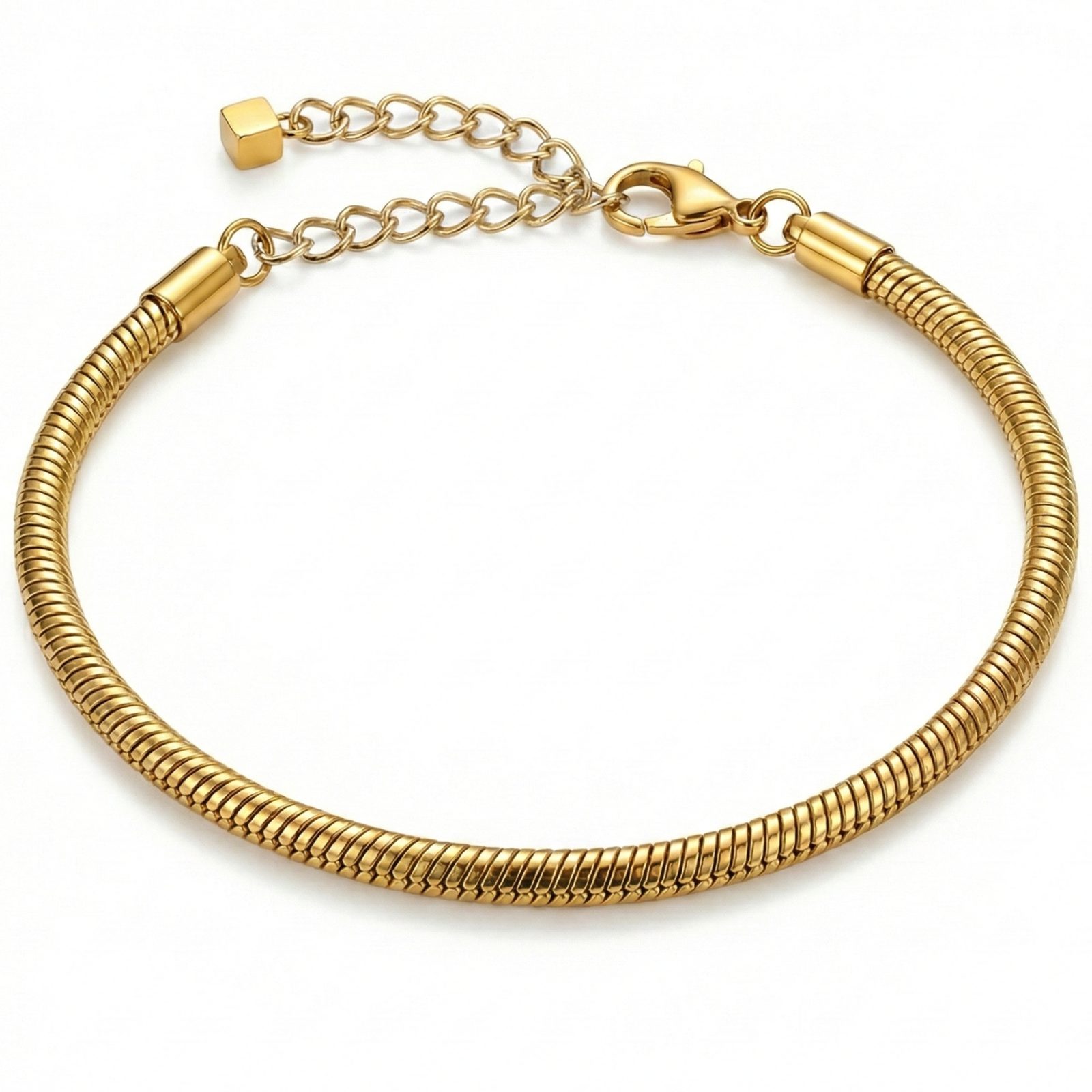
The worry most shoppers have is simple: will the gold fade in a month? The Leporem 18K Gold Plated Herringbone Bracelet uses a thick 18K PVD layer over surgical stainless steel, so the gold color and shine hold up through showers and workouts instead of rubbing off after the first sweaty commute. Sizing is the second worry, and a lobster clasp with an extender chain adjusts from 6.7 to 7.9 inches, so no exact wrist measurement is needed. The flat herringbone links in the close-up photos are the detail worth judging for yourself.
Keeps its gold tone through showers and workouts - thick 18K PVD plating over surgical stainless steel.
Fits without measuring - lobster clasp plus extender adjusts from 6.7 to 7.9 inches, finished with a small gold cube charm.
Stays closed under sleeves and bag straps - a lobster clasp, never a magnetic one.
Key Takeaways
Base metal matters more than karat: brass and copper oxidize and can leave green or black marks, while 316L stainless steel resists tarnish through a chromium oxide surface layer.
PVD gold over 316L stainless steel is generally described as the most durable plating type, though nearly every lifespan number comes from sellers rather than independent labs.
Gold vermeil is a defined term: a 925 sterling silver base with gold of at least 10K and at least 2.5 microns thick.
A "flash plated" listing means a very thin gold layer, and very thin plating can fade within about a week.
Care habits can stretch lifespan dramatically; one seller estimates about 3 years with good habits versus about 1 year without.
What Makes a Tarnish Free Chain Bracelet Resist Discoloration?
A tarnish free chain bracelet resists discoloration because of its base metal and coating, not its gold color. According to retailer buying guides from Refinery29, Bustle and Joybuy (2025-2026), brass and copper bases oxidize and leave green or black marks on skin, while 316L stainless steel resists tarnish through a protective chromium oxide surface layer.
Most buyers read a listing from the outside in. They see "18K" and assume the color will last, when the karat only tells you the shade of the surface. The smarter habit is to read the label from the inside out: base metal first, coating method second, thickness third, karat last. Everything in the checklist below follows that order.
Tarnish is the dull, darkened film that forms when a metal reacts with oxygen, moisture, sweat or chemicals. PVD (physical vapor deposition) is a vacuum coating process that bonds a thin film of metal, in this case gold, onto the surface of the base piece. Traditional electroplating deposits gold in a liquid bath instead, and when that layer is thin and sits over brass, the reactive metal underneath is only one scratch away from your skin.
Sterling silver is a special case. Bustle and several retailer listings (2025-2026) note that silver tarnishes from sweat, skin oils and cosmetics, so a gold-plated sterling silver bracelet such as the Miabella Italian herringbone link can wear differently from a stainless steel piece once the gold thins out.
The 7 Checks Before You Choose a Tarnish Free Chain Bracelet
The fastest way to judge a tarnish free gold chain bracelet is to run every listing through the same seven questions. Save this list; it works for herringbone, snake, box and rope chains alike.
Base metal. Look for 316L stainless steel (often sold as surgical steel). Treat "alloy," "brass," "copper" or an unnamed base as a warning sign for green-wrist marks.
Plating method. PVD over stainless steel is the current benchmark. "Flash plated" means a very thin layer, as seen in listings like the Adornia herringbone bracelet at Kohl's.
Plating thickness. Ask for a micron number. A Korean manufacturer blog, Kingjy (2025), cites about 2-3 microns as the range that slows wear, while very cheap thin plating can fade within about a week.
Water claims. Read what "waterproof" actually covers: a shower, a swim, or the gym. An unqualified claim with no conditions tells you nothing.
Allergy wording. A Joybuy UK guide (2026) recommends looking for "hypoallergenic," "nickel-free" and "lead-free." Note that 316L stainless steel contains nickel; it releases little, but anyone with a known nickel allergy should be careful.
Clasp and wear points. Check the clasp type, the jump ring and how the links meet. Plating wears first wherever metal rubs metal.
Care and return policy. Check whether the seller explains care and accepts returns if the color shifts early. A seller who will not answer basic material questions is giving you an answer.
Content on "surgical steel" and "18K" labels is the gap most guides skip. A listing can say both and still be thin flash plating over an unnamed core. Before checkout, send the seller three short questions: What is the base metal? Which plating method do you use? How thick is the gold layer in microns? If a friend of yours keeps buying the cheap version and wondering why her wrist turns green, this is the part to send her.
Gold Plated vs Vermeil vs PVD: Which Lasts Longest?
PVD gold over 316L stainless steel is generally described as the longest-lasting option among gold-look chain bracelets, followed by gold vermeil, with flash plating over brass wearing fastest. According to Branvas, Doublestone Steel and Atolea (2025-2026), standard plating lasts from weeks or months up to a few years, depending on thickness and base metal.
Feature | Flash plated | Gold-plated sterling silver | Gold vermeil | PVD gold on 316L steel | Leporem Herringbone |
|---|---|---|---|---|---|
Base metal | Varies by listing | 925 sterling silver | 925 sterling silver | 316L stainless steel | Surgical stainless steel |
Gold layer | Very thin | Gold plating, thickness varies | At least 10K, at least 2.5 microns | PVD gold, commonly 18K | Thick 18K PVD plating |
Durability | Very thin plating can fade in about a week | Silver underneath tarnishes from sweat and cosmetics | Defined standard, mainly in the US and UK | Sellers claim years of daily wear | Built so color and shine hold up through showers and workouts |
Clasp | Check listing | Check listing | Check listing | Check listing | Lobster clasp plus extender, no magnet |
Gold vermeil has the clearest rules of the group. Mint & Lily, Helzberg and Ross Metals (2025-2026) define vermeil as a 925 sterling silver base with a gold layer of at least 10K and at least 2.5 microns thick, a standard regulated mainly in the US and UK. PVD gold on steel has no equivalent legal definition, which is why the seller questions above matter.
Care changes the numbers more than most buyers expect. Branvas and Aquamarise (2025-2026) say the same PVD piece lasts about 3 years with good habits versus about 1 year without. In real terms, that is the gap between a bracelet that still matches your watch next winter and one that looks coppery by spring.
Does a 316L Stainless Steel Bracelet Ever Tarnish?
A 316L stainless steel bracelet resists tarnish because its chromium oxide surface layer protects the steel from turning green or black. The gold plating on top is a separate layer, though, and that layer can thin with friction, sweat and chemicals, so color can fade at high-rub spots even while the steel underneath stays unchanged.
Plating wear on steel looks different from tarnish on brass. Brass darkens and stains skin; plated steel tends to show a slightly paler, silvery tone at the edges of links once the gold thins. That difference is why 316L stainless steel has become the base of choice for gold-look jewelry, and Joybuy and Kohl's listings (2026) show that most herringbone bracelets on the market now use a stainless steel core with 18K plating applied by PVD or vacuum plating.
Nickel deserves an honest line here. 316L stainless steel contains nickel, even if it releases little of it. Readers with a diagnosed nickel allergy should not treat any steel bracelet as automatically safe and should ask the seller for test data first.
What Should a 316L Stainless Steel Bracelet Clasp Look Like?
A good 316L stainless steel bracelet clasp is a lobster clasp attached with a firmly closed jump ring, ideally paired with an extender chain. A lobster clasp locks with a spring lever, so it stays shut under sleeves and bag straps, while magnetic clasps can pop open when a strap or scarf tugs sideways.
Chain bracelets wear in predictable places, and most guides never mention them. The clasp and jump ring rub every time you fasten or move your wrist. Links rub against each other all day. A herringbone chain adds one more factor: its flat, mirror-like surface reflects light evenly, which looks beautiful but also shows scratches and thinning plating sooner than a round rope or snake chain would.
The extender solves a separate problem. Bracelets that are too loose slide against desks and laptops all day, which adds friction to the plating; bracelets that are too tight trap sweat. An adjustable range lets you set the fit snug enough to stop sliding. If you want to see how a lobster clasp, extender chain and cube charm come together on a flat herringbone chain before choosing, the product photos for the Leporem 18K Gold Plated Herringbone Bracelet show the clasp end clearly.
Is a Waterproof Chain Bracelet That Won't Tarnish Actually Real?
A waterproof chain bracelet that won't tarnish is a marketing phrase, not a guarantee. Refinery29 and Bustle roundups (2026) show retailers increasingly promoting "wear in the shower" claims, but plain water is rarely the problem. Chlorine, perfume, lotion and sweat do more damage, and shoppers are growing skeptical of claims that list no conditions.
Running your own small test is the honest way to judge any bracelet. Wear it through a normal week, including a shower and a workout, then look at the clasp end and the inner side of the links in daylight. If the tone at those spots matches the rest of the chain, the plating is holding; if the edges look paler, the layer is thinning faster than the listing implied.
A simple routine keeps any plated chain looking newer for longer:
Put the bracelet on after perfume, lotion and sunscreen, not before.
Rinse off sweat with plain water and pat the chain dry.
Take it off before chlorinated pools and hot tubs.
Store it alone in a pouch so links do not scratch other jewelry.
Who a Plated Herringbone Bracelet Is Not For
A gold plated herringbone bracelet is not the right choice for everyone, and saying so up front saves a return. Anyone with a diagnosed nickel allergy should skip plated steel unless a seller provides test results. Buyers who want solid gold for resale value or an heirloom stamp should note that Leporem pieces carry no material stamp.
The plated route fits a different reader: someone who wants a gold look for daily wear, layers bracelets with a watch, and would rather not pay solid-gold prices while gold stays expensive. For that reader, a thick PVD layer over surgical stainless steel and a clasp that stays shut matter more than a karat stamp.
Frequently Asked Questions
How long does 18K gold plated jewelry last?
18K gold plated jewelry lasts anywhere from weeks to a few years, depending on plating thickness, base metal and care. Seller guides from Branvas, Doublestone Steel and Atolea (2025-2026) describe standard plating as lasting weeks to years, and PVD gold on 316L stainless steel as the longest-lasting, though no independent testing confirms those figures.
Can you shower with a gold plated bracelet?
A gold plated bracelet can usually handle a quick shower when the plating is PVD over stainless steel, but soap residue, hot water and repeated exposure still speed up wear. Rinse the chain with plain water, pat it dry, and take the bracelet off before chlorinated pools, lotion and perfume.
Why does a cheap bracelet turn your skin green?
A cheap bracelet turns skin green when its brass or copper base metal oxidizes and reacts with sweat after thin plating wears through. Retailer guides from Refinery29, Bustle and Joybuy (2025-2026) name copper-based metals as the usual cause. The green mark washes off skin, but the worn plating on the bracelet does not come back.
What is the difference between 18K gold plating and PVD coating?
18K gold plating describes the karat and color of the surface layer, while PVD coating describes the method used to apply that layer. PVD bonds the gold film in a vacuum and is generally described as more durable than traditional electroplating, which is why 18K PVD gold over 316L stainless steel is now the everyday benchmark.
Is gold plated jewelry safe for sensitive skin?
Gold plated jewelry can suit sensitive skin when the listing says hypoallergenic, nickel-free and lead-free, according to a Joybuy UK guide (2026). Plating can wear through over time and expose the base metal underneath, so anyone with a diagnosed nickel allergy should ask the seller for test results before wearing a plated piece daily.
Does gold plated stainless steel tarnish?
Gold plated stainless steel resists tarnish better than plated brass or copper, because 316L stainless steel forms a chromium oxide surface layer that does not turn green or black. The gold plating on top can still thin with friction, sweat and chemicals, so color may fade at high-rub spots like the clasp first.
Choosing a tarnish free chain bracelet gets easier once you stop reading the karat first. Start with the base metal, confirm the plating method and thickness, check the clasp, and plan a simple care routine. A thick 18K PVD layer over surgical stainless steel, a lobster clasp and an adjustable extender cover most of that checklist, and the reviews on the Leporem 18K Gold Plated Herringbone Bracelet are the place to see how the color holds up for other everyday wearers.
More in this series
EP 6 is the last one: everything from EP 1-5 folded into a single checklist.


Comments