


Can You Clean Gold Plated Jewelry With Baking Soda? No
This post contains links to our own Amazon store.
📚 NOBODY TELLS YOU THIS · EP 03
If your gold plated bracelet looks dull, no, you can't clean gold plated jewelry with baking soda. Baking soda is a mild abrasive that sands away a gold layer that can be thinner than a micron. Use mild dish soap, lukewarm water and a soft cloth instead, unless the dark spots are base metal showing through, which no cleaner can fix.
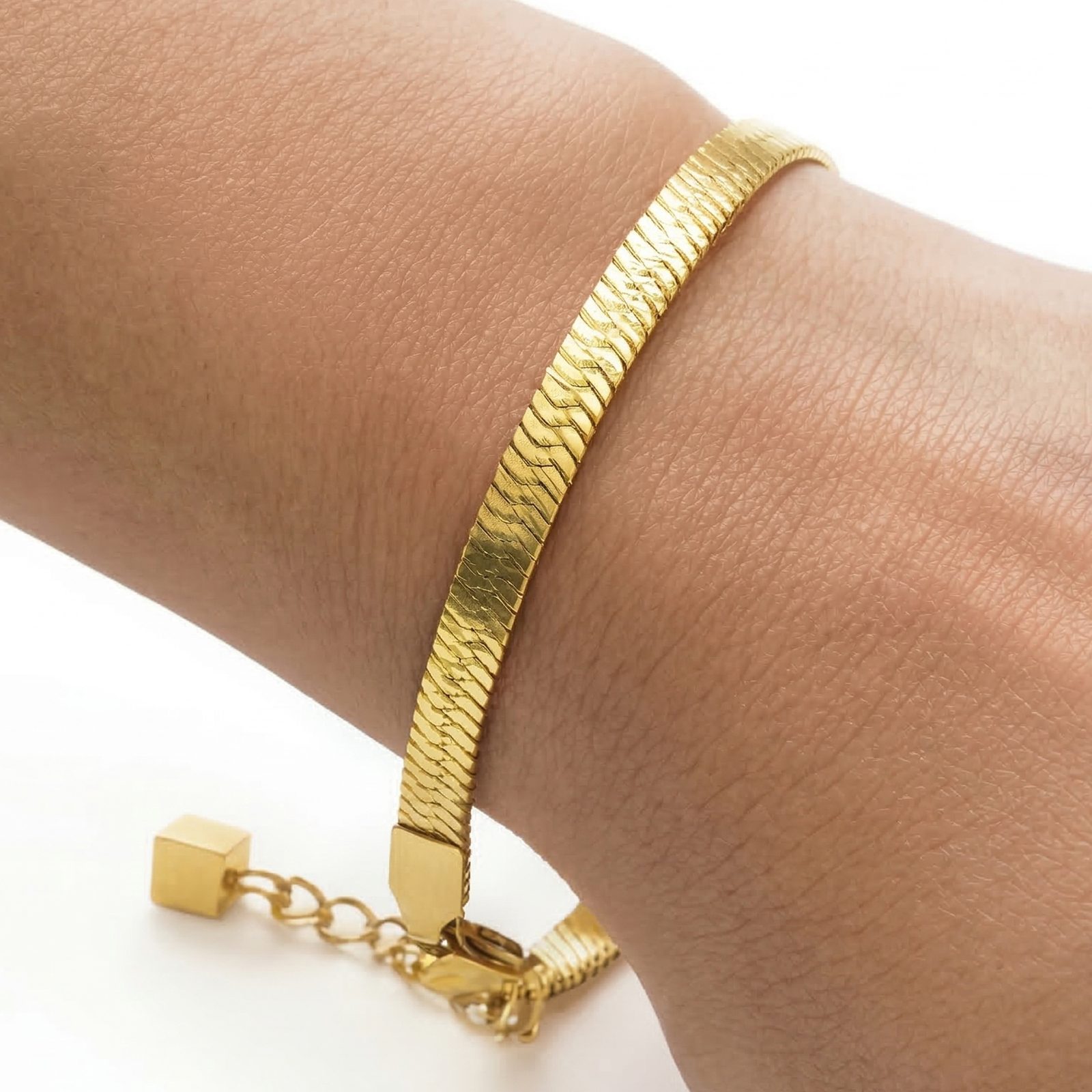
Worried that the next bracelet will fade just as fast? The answer depends on how the gold goes on. The Leporem round snake bracelet uses 18K PVD plating over surgical stainless steel, applied as a thick layer so the gold color and shine hold up through showers and workouts. For sizing, the lobster clasp and extender chain adjust from 6.7 to 7.9 inches, so you don't need an exact wrist measurement.
Holds its gold color through showers and gym days, thanks to thick 18K PVD plating over surgical stainless steel.
Fits without measuring: a lobster clasp plus extender adjusts from 6.7 to 7.9 inches.
Stays closed under sleeves, because Leporem never uses magnetic clasps.
If you're replacing a piece that wore through, the Leporem 18K Gold Plated Round Snake Bracelet is worth a look, and the close-up photos show how the clasp, extender and small gold cube charm sit together.
Key Takeaways
Baking soda, toothpaste and polishing cloths are abrasive, and abrasion thins gold plating that is measured in microns.
According to the FTC Jewelry Guides, gold electroplate can be as thin as about 0.175 microns, so a few scrubbing sessions can expose the base metal.
The safe cleaning method is a short soak in lukewarm water with mild dish soap, a soft cloth, a rinse and a full dry.
Dark patches that come back after gentle washing usually mean worn plating, and the real fix is replating rather than more scrubbing.
What Is Gold Plating, and Why Does It Scrub Off So Easily?
Gold plating is a thin layer of gold bonded to a cheaper base metal such as brass or stainless steel, usually by electroplating. Jewelers Mutual and other care guides point out that harsh cleaning or abrasion can wear through that layer and expose the base metal underneath. The gold is a skin, not the whole piece.
The thickness is what makes the difference. According to the FTC Jewelry Guides (16 CFR Part 23), as cited by Sky Jems, the minimum for gold electroplate is about 0.175 microns. Retailers such as Finematter describe plating under about 0.5 microns as "flash plating" that wears quickly, although that 0.5-micron figure is an industry convention and not a verified FTC rule. For comparison, a human hair is many dozens of microns thick. Any cleaning method that works by friction is working directly against a layer that thin.
Gold vermeil sits at the thicker end. According to the FTC's 2018 update to its Jewelry Guides, vermeil must have a sterling silver base with gold of at least 10K, and the gold must be at least 2.5 microns thick. That is roughly 14 times the electroplate minimum. Even vermeil is still plating, though, and repeated scrubbing will eventually reach the silver.
Why Can't You Clean Gold Plated Jewelry With Baking Soda?
You can't clean gold plated jewelry with baking soda safely because baking soda cleans by abrasion. The fine crystals lift grime by scratching it off, and they scratch the gold surface at the same time. On solid gold the loss is tiny. On plating measured in fractions of a micron, every pass removes gold that will not grow back.
The baking soda hack spreads because the first result looks good. A paste of baking soda and water strips off the film of skin oil, lotion and soap residue, so the bracelet looks brighter right away. The damage only shows later, when the shine dulls faster than before or a pinkish or gray tone appears on the high points where you scrubbed hardest. Brite.co lists baking soda among household items likely to damage jewelry for exactly this reason.
Searches for how to clean tarnished gold plated jewelry with baking soda usually come from people who already see discoloration. That's when baking soda does the most harm. If the darkness is base metal showing through, scrubbing it with an abrasive only widens the bare patch.
The DIY hacks to skip, ranked by how fast they thin plating
Jewelers have started publishing "don't make it worse" guides because the same handful of hacks keeps showing up. If a friend of yours swears by the toothpaste trick, this is the list to send them:
Toothpaste: made to polish tooth enamel, so it's abrasive by design. Robinson's Jewelers advises against using it on gold jewelry.
Baking soda paste: gentler than toothpaste but still abrasive, and still the wrong tool for plating.
Polishing cloths with compound: fine for solid gold or silver, but the polishing compound removes the top layer of metal, which on plated pieces is the gold.
Foil, salt and hot water: a chemistry trick aimed at silver tarnish that does nothing useful for gold plating and exposes the base metal to salt.
Bleach, chlorine and ammonia: Jewelers Mutual, JTV and Hunker all warn against these because they can attack the plating and the base metal underneath.
Stiff brushes: the bristles do the same job as an abrasive powder.
How Do You Clean Gold Plated Jewelry Without Removing the Plating?
The safest way to clean gold plated jewelry without removing the plating is a short soak in lukewarm water with a drop of mild dish soap, followed by a gentle wipe with a soft cloth, a clean-water rinse and a complete dry. Jewelers Mutual, JTV, Hunker and Atolea all recommend this same low-friction routine for plated pieces.
Fill a small bowl with lukewarm water, not hot, and add one drop of mild, fragrance-free dish soap.
Soak the piece for a few minutes so the soap loosens skin oil and product film without any rubbing.
Wipe gently with a soft microfiber or cotton cloth, following the direction of the chain rather than scrubbing back and forth.
Rinse in clean lukewarm water to remove every trace of soap, since leftover residue dulls the surface.
Pat dry, then lay the piece flat on a dry towel until it is completely dry before storing it.
Repeat only when the piece looks filmy. A weekly wipe with a dry soft cloth after wearing does more than frequent deep cleans.
Snake chains need an extra step
Snake chains are built from tight, overlapping links that flex against each other, which makes them smooth to wear and good at trapping lotion and soap residue. Twisting or wringing a snake chain to clean it can kink the links. Lay the chain straight in the soapy water, press the cloth along its length instead of rubbing, and give it extra drying time so no moisture stays between the links.
Is It Tarnish, or Is the Plating Wearing Off?
Gold plated jewelry discolors in two different ways, and only one of them can be cleaned. A surface film of oil, sweat, perfume or soap residue looks cloudy and comes off with a gentle soap soak. Base metal showing through worn plating looks pink, gray or dark, stays after washing, and needs replating instead of cleaning.
Use a simple before-and-after check. Wash the piece once with the soap method above and let it dry fully. If the color evens out, you were dealing with film, and better habits will keep it away. If the same spots stay dark, especially on edges, the clasp and the inside of the bracelet where it rubs your wrist, the gold has worn through. Brite.co's vermeil guide puts it bluntly: when the base metal is showing, scrubbing only removes more plating, and a jeweler should replate the piece.
Most top-ranking care articles skip this distinction. That gap is why people keep reaching for baking soda on a bracelet that no cleaner can save, and end up with a bigger bare patch than they started with.
Why Is My Gold Plating Wearing Off So Fast?
Gold plating usually wears off fast because of daily contact with perfume, lotion, sunscreen, hairspray, sweat and chlorine, combined with friction and harsh cleaning. Care guides from Idyl and kingjy.com note that these products leave films or chemically attack thin plating. The thinner the plating, the faster those habits show up as dull or bare spots.
Wearing jewelry all day, every day, including in the shower, at the gym and in the pool, has made early wear a common complaint. A few habits stretch the life of any plated piece:
Put jewelry on last, after perfume, lotion, sunscreen and hairspray have dried.
Take plated pieces off before swimming in chlorinated pools or hot tubs.
Wipe off sweat with a dry soft cloth after a workout instead of letting it sit overnight.
Store each piece separately in a dry pouch so chains don't rub against each other or other metals.
Keep jewelry out of steamy bathrooms between wears.
How Thick Is Gold Plating? Flash Plating vs. Vermeil vs. PVD
Gold plating thickness ranges from about 0.175 microns, the FTC electroplate minimum, to at least 2.5 microns for FTC-defined vermeil. Thicker plating and a harder bond to the base metal hold color longer. PVD (physical vapor deposition) plating over stainless steel is a different construction from ordinary electroplate and is often marketed for tarnish resistance.
Feature | Flash plating | Gold vermeil | Leporem Round Snake Bracelet |
|---|---|---|---|
Base metal | Often brass | Sterling silver | Surgical stainless steel |
Gold layer | Under about 0.5 microns (retailer convention) | 10K or higher, at least 2.5 microns (FTC, 2018) | 18K PVD plating, applied as a thick layer |
Everyday wear | Wears quickly with friction and moisture | Lasts longer, but still wears with scrubbing | Gold color and shine hold up through showers and workouts |
Sizing and closure | Varies | Varies | Lobster clasp plus extender, 6.7 to 7.9 inches, no magnetic clasp |
Safe with baking soda? | No | No | No. Use mild soap and a soft cloth |
A thicker PVD layer doesn't make any piece immune to abrasives, which is why the bottom row reads the same in every column. What the construction changes is daily life: a shower or a sweaty workout is less likely to leave you with a dull bracelet, so you need fewer cleanings and you're less tempted by baking soda. The stainless steel base also means the extender chain lets the bracelet sit loose or snug on the same wrist without a trip to resize it.
One honest limit: a plated bracelet, even a thick PVD one, is not for someone who wants solid gold that can be polished, resized and refinished for decades. Readers with a known nickel allergy should also be careful with any stainless steel jewelry, since surgical steel contains nickel. For everyone else who wants an everyday gold chain that tolerates real life, a thick 18K PVD layer over stainless steel is the sensible middle ground between flash-plated fashion pieces and fine jewelry.
Frequently Asked Questions
Can you clean tarnished gold plated jewelry with baking soda?
No. Cleaning tarnished gold plated jewelry with baking soda trades a dull film for permanent wear, because baking soda is abrasive and gold plating is measured in microns. Soak the piece in lukewarm water with a drop of mild dish soap, wipe with a soft cloth, rinse and dry. If darkness remains, the base metal is likely showing.
How long does gold plating last?
Gold plating lasts anywhere from weeks to years, depending on thickness and habits. Retailers describe plating under about 0.5 microns as flash plating that wears quickly, while FTC-defined vermeil needs at least 2.5 microns. Keeping gold plating away from perfume, lotion, chlorine and abrasive cleaners adds the most life for the least effort.
Can you shower or sleep in gold plated jewelry?
Most care guides advise taking gold plated jewelry off before bathing, swimming and sleeping, because soap film, chlorine, sweat and friction against bedding all wear thin plating. Thicker constructions such as PVD-plated stainless steel hold up better through showers, but removing gold plated jewelry for sleep and swimming still extends its color.
Can gold plated jewelry be replated?
Yes, many jewelers can replate gold plated jewelry by cleaning the piece and electroplating a fresh gold layer over the base metal. Replating is the only real fix once dark base metal shows through worn plating, since scrubbing removes more gold. Ask the jeweler about plating thickness so the new layer lasts longer.
Is it safe to put gold plated jewelry in an ultrasonic cleaner?
Ultrasonic cleaners are a gamble for gold plated jewelry. Some jewelry sources warn that ultrasonic vibration can strip plating, and others warn against it for plated pieces with glued stones. Claims that ultrasonic cleaning is safe usually refer to solid gold, so hand washing with mild soap is the safer choice for plated pieces.
Can you use toothpaste to clean gold plated jewelry?
No. Toothpaste contains abrasives designed to polish enamel, and jewelers such as Robinson's Jewelers advise against using toothpaste on gold jewelry. On gold plated jewelry, toothpaste can scratch and thin the micron-scale gold layer, especially on textured chains where paste lodges between links. Mild dish soap and a soft cloth clean without abrasion.
Gold plated jewelry lasts longest when you clean it less and more gently: soap, lukewarm water, a soft cloth and no baking soda. If your current bracelet has already worn through to the base metal, replating or a sturdier replacement are your two options. The Leporem 18K Gold Plated Round Snake Bracelet's product page shows the lobster clasp, the 6.7 to 7.9 inch extender and the current price, so you can compare it with a replating quote.
More in this series
EP 4 is “Leather vs chain necklace: which is better for daily wear?”. Subscribe so it reaches you first.
Comments