


Lace vs Mesh Thong: Which Is Better for Everyday Wear?
This post contains links to our own Amazon store.
📚 LINGERIE CARE BASICS · EP 05
In the lace vs mesh thong decision for everyday wear, the gusset decides it: a soft lace thong with a cotton-lined gusset is the better daily pick for most people. Lace lies smoothly under fitted clothes, and cotton covers the part that touches skin. All-mesh wins in one case: sweaty gym days and humid summer heat.
Fit is the biggest worry with any multipack, and the honest answer here is that the Leporem 6-pack runs larger than expected. "Runs larger than expected" is the most common return reason. Measure your natural waist with a soft tape before you choose. The S–XL chart is built around waists of 65, 67, 73 and 77 cm, so choose by that number, not by the letter you usually buy.
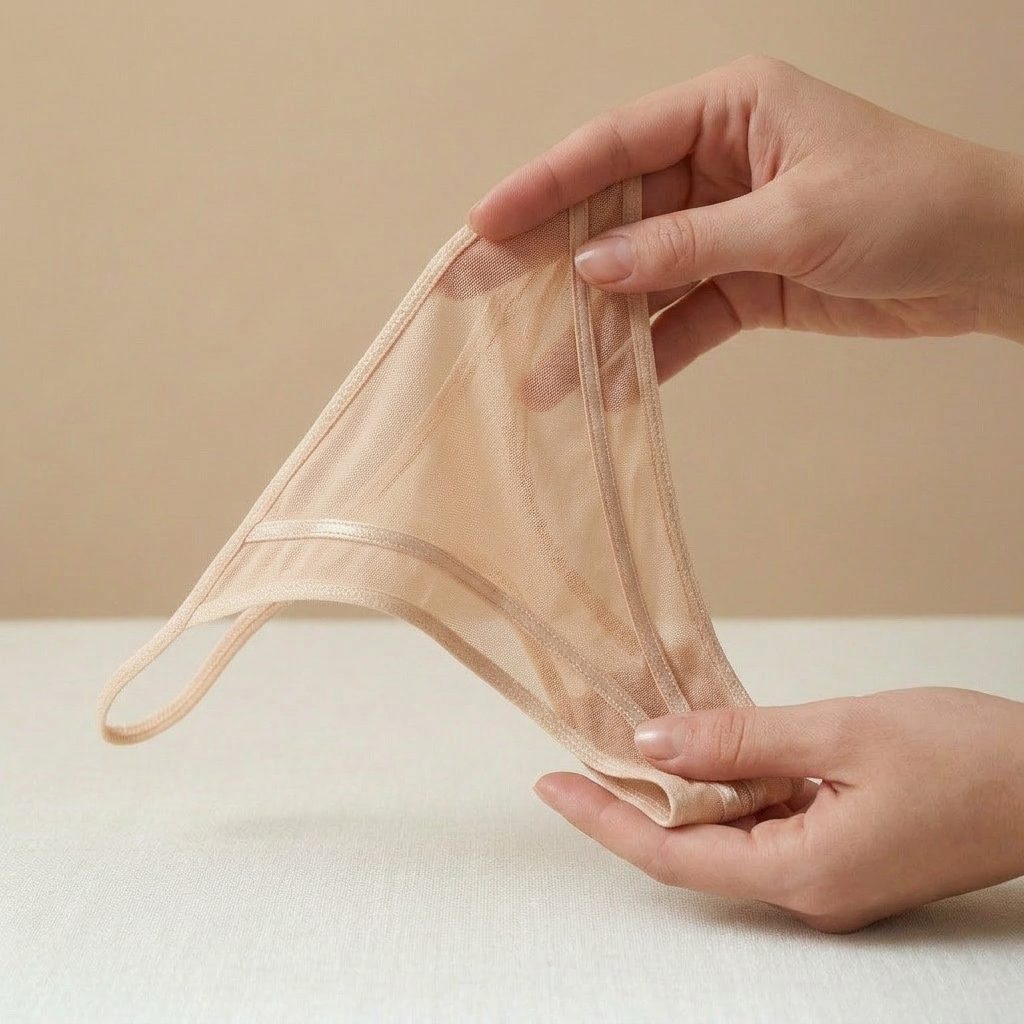
No line under fitted clothes: the lace is thin enough to lie flat under trousers and knits.
Cotton where it counts: the gusset that touches skin is cotton, not lace.
A full rotation in one pack: 6 colors across sizes S–XL, picked by waist measurement.
Key Takeaways
The gusset fabric matters more than the thong shape: research reported by The Conversation Australia (2024) linked non-cotton crotch underwear to more yeast infections and bacterial vaginosis.
Mesh is the more breathable outer fabric, and lace is softer-looking and smoother under clothes. A cotton gusset makes either one workable every day.
Lace is less durable: edges fray and elastic threads loosen after repeated washing, so a mesh bag and a gentle cycle add months of wear.
Choose the thong by the day. Mesh suits workouts and humid days, and cotton-lined lace suits workdays and fitted clothes.
Persistent discharge, odor, itching or pain is a reason to see an OB-GYN, not a reason to keep switching fabrics.
What Is the Real Difference Between a Lace Thong and a Mesh Thong?
The real difference between a lace thong and a mesh thong is the outer fabric. Mesh is an open, even knit built for airflow. Lace is a patterned stretch fabric, usually nylon and spandex, built for softness of line and looks. The gusset is what decides daily comfort, and many lace and mesh thongs share the same cotton-lined gusset.
A gusset is the small panel of fabric in the crotch of underwear, the one part that sits directly against the most sensitive skin. Most comparison articles skip it, which is why so many readers end up thinking "lace" and "mesh" are the whole choice. Gynecologists quoted by TheSkimm, Katie Couric Media and Mylola between 2023 and 2025 give the same advice: keep a cotton or cotton-blend gusset even when the rest of the garment is lace or mesh.
Regulators have taken the gusset seriously too. Yahoo News (2024) reported that Russia, Belarus and Kazakhstan restricted lace panties without a cotton lining under Eurasian Customs Union textile rules. The same article questioned the scientific basis for the ban, and lace itself is not the hazard. The story still shows the gusset is the part of the garment that deserves your attention.
Lace vs Mesh Thong Compared: Breathability, Durability and Visibility
A lace vs mesh thong comparison by category shows a split result. Mesh leads on breathability and quick drying. Lace leads on softness of look and on staying smooth under fitted clothes. Neither fabric wins on durability by default. The table below adds a column for the Leporem lace 6-pack, filled only with verified product details.
Factor | Mesh thong | Lace thong | Leporem 6-Pack Lace Thong |
|---|---|---|---|
Breathability | Highest; the open knit lets air move | Good when the lace is thin; lower when it is dense | Thin lace |
Fabric against skin | Varies; check for a cotton lining | Varies; unlined lace is the most common irritation complaint | Cotton gusset |
Visibility under clothes | Very low with flat or bonded edges | Low with thin stretch lace; higher with thick trims | No line under fitted clothes |
Durability | Holds shape well; fine mesh can snag | Edges fray and elastic threads loosen with frequent washing | Not specified; wash gently |
Sizing note | Brand-dependent | Brand-dependent | Runs large; choose by waist (65, 67, 73, 77 cm across S–XL) |
Best day | Gym, humid weather, long hot commutes | Workdays, fitted trousers, knit dresses | Daily rotation across 6 colors |
Is Mesh Underwear Breathable Enough for Daily Wear?
Mesh underwear is the most breathable outer fabric you can choose for daily wear. The open knit lets heat and moisture escape faster than dense lace or solid microfiber. Breathability on the outside does not replace a cotton gusset, though. Synthetic mesh directly against sensitive skin can still trap moisture where airflow is lowest.
Retailer guides from Lemonade Dolls, HankyPanky and ThirdLove (2024–2025) all rank mesh first for airiness and no-show wear. Those are commercial sources with products to sell, but they agree with basic textile logic. In practice, mesh pays off most on a 45-minute spin class or a humid August afternoon, when you'd rather feel air than fabric.
Are Lace Thongs Comfortable Enough to Wear Every Day?
Lace thongs are comfortable enough to wear every day when two conditions are met: the lace is soft and stretchy rather than stiff, and the gusset is lined with cotton. The most common lace complaint is scratchy lace touching sensitive skin directly. A lined gusset solves exactly that problem.
Stiff, decorative lace with heavy trim belongs to the "special occasion" drawer. Hygiene guidance from ThirdLove and The Healthy suggests saving fancy lace for those days. Thin stretch lace works differently. Because the Leporem lace is thin, it lies flat under fitted clothes instead of leaving a ridge at the hip, and because the gusset is cotton, the lace never sits where friction and moisture build up. Thin lace gives you a smooth line, and the cotton gusset is the part you stop noticing by mid-morning.
Is It OK to Wear a Thong Every Day?
Wearing a thong every day is generally fine for healthy skin, according to the best available evidence. A study of about 1,000 women, reported by The Healthy (Reader's Digest), found no clear rise in UTIs or bacterial vaginosis among regular thong wearers. Coverage of that research is mixed, so gusset fabric is the safer thing to focus on.
The research record deserves an honest caveat. Secondary sources date the study differently, and The Conversation Australia (2024) describes thong wearers reporting more infections. The finding that holds up across the coverage is different: non-cotton crotch underwear was linked to more yeast infections (candidiasis) and bacterial vaginosis. In other words, the evidence points at the fabric touching your skin, not at the thong cut itself.
Korean health sources reach the same practical conclusion. Hanyang University Medical Center's health column and Doctornow's medical Q&A (2024–2026) recommend 100% cotton underwear and frequent changes. Both say to see an OB-GYN if discharge, odor, itching or pain persists. No source recommends treating a symptom by switching from lace to mesh, and neither should you.
The Gusset Check: 4 Steps Before You Buy Any Thong
The gusset check is a quick four-step test that tells you whether a lace or mesh thong is suitable for daily wear before it ever reaches your drawer. Most product pages show enough detail to run it in under a minute. If a friend keeps buying all-lace pairs and then complaining about itching, this checklist is the part to send her.
Find the fabric line for the gusset. Look for "cotton gusset," "cotton-lined" or a separate gusset material in the listing. If only the outer fabric is listed, assume the gusset is synthetic.
Look at the inside photo. A cotton lining shows as a matte panel with a visible seam line. Lace or mesh continuing straight through the crotch means no lining.
Check the edges. Thin, flat edges disappear under leggings. Thick elastic or heavy bonding tape can show through, even on "seamless" styles, according to 2026 no-show guides from Join Eby and Olivia Paisley.
Measure your waist, then read the chart. A thong that is too big shifts and rubs. A thong that is too small digs in. Your waist measurement in centimeters beats your usual letter size every time.
Which Thong Should You Wear on Which Day?
The best thong for everyday wear depends on what the day asks of it. Cotton-lined lace covers most office days and fitted outfits. Mesh covers heat and sweat. Plain cotton covers days when your skin is already irritated. A simple rule by situation keeps you from forcing one fabric into every role.
Workday in fitted trousers or a knit dress: thin stretch lace with a cotton gusset, for a smooth line without a visible panty line (VPL).
Gym or a long workout: breathable all-mesh with flat edges, changed right after the session.
Humid summer days: mesh or very thin lace, plus a mid-day change if you are outdoors for hours.
Sensitive or already irritated skin: full cotton underwear until the irritation settles, and an OB-GYN visit if it lasts.
Leggings and bodycon fits: the thinnest edge you own, lace or mesh, checked in a mirror under daylight.
The workday category is where a multipack earns its place. Six pairs of cotton-lined lace cover a full work week with a spare, so no single pair gets washed into fraying. Before choosing, the one thing worth checking yourself is which of the 6 colors work under the clothes you wear most, and whether your waist measurement lands closer to one size or the next.
How to Wash Lace and Mesh Thongs So They Last
Lace and mesh thongs last longest when they are washed separately from heavy items, in a mesh laundry bag, on a gentle cycle with cool water, and air-dried. Lace edges fray and elastic threads unravel fastest under heat and friction. A dryer cycle shortens their life more than daily wear does.
Washing underwear separately is also the first hygiene rule from ThirdLove and The Healthy (2024–2025). Their replacement rule is just as clear: retire any pair that is stained, has lost its elastic stretch, or holds buildup that no longer washes out. On a lace thong, the warning signs usually show up at the waistband first. A slightly wavy edge or a loose thread there means the pair is nearing the end. Rotating six pairs instead of two spreads that wear out and keeps each gusset fresh.
Who the Leporem Lace Thong Is Not For
The Leporem 6-pack lace thong is not the right choice for anyone who needs dedicated workout underwear for long, sweaty training sessions. A breathable all-mesh or sport-specific style suits those hours better. It also won't suit anyone who prefers full-coverage briefs, since the cut is a G-string. If your waist falls between chart sizes, remember the pack runs large.
For everyone else, the case is straightforward. You get thin lace for a line-free look under fitted clothes, a cotton gusset where your skin actually needs it, and enough colors to rotate through a week. Those three points line up with the criteria above, which is the point: the product fits the checklist, not the other way around.
Frequently Asked Questions
Is a lace or mesh thong better for everyday wear?
A lace thong with a cotton-lined gusset is the better everyday pick for most people who want a smooth look under fitted clothes and a softer feel. An all-mesh thong suits gym days and humid weather. For daily wear, the deciding factor is the gusset fabric, not whether the outer layer is lace or mesh.
Do thongs cause yeast infections or UTIs?
Thongs have not been clearly shown to cause yeast infections or UTIs. A study of about 1,000 women found no clear rise among regular thong wearers, though later coverage reports mixed results. The same research linked non-cotton crotch fabric to more yeast infections and bacterial vaginosis, so the gusset material matters more than the thong shape.
Does a cotton gusset make a lace thong okay for daily wear?
A cotton gusset makes a lace thong much better suited to daily wear because cotton is the fabric gynecologists describe as the most breathable and least irritating where underwear touches skin. The lace outer layer handles the smooth look under clothes, and the cotton lining handles the part that matters for comfort and hygiene.
Which thong is the most invisible under leggings?
The most invisible thong under leggings has thin fabric and flat edges with no thick elastic band. Seamless thongs with bonded edges and thin stretch lace thongs both work well. Very thick bonding tape can still show through tight leggings, so check the edge thickness in close-up product photos before choosing a thong.
How often should you replace thongs?
Thongs should be replaced whenever they are stained, the elastic has lost its stretch, or buildup no longer washes out, according to hygiene guidance from ThirdLove and The Healthy. Lace thongs tend to show wear first at the edges, so fraying lace or loose elastic threads are a clear signal that a pair should be retired.
Is lace underwear bad for vaginal health?
Lace underwear is not bad for vaginal health on its own. The main problem is lace or synthetic fabric sitting directly on sensitive skin, and a lace thong with a cotton-lined gusset avoids that contact. Anyone with persistent discharge, odor, itching or pain should see an OB-GYN instead of simply switching underwear fabric.
The lace vs mesh thong question comes down to a smaller one: what touches your skin? Choose mesh for sweat and heat. Choose thin, cotton-lined lace for everyday fitted clothes. Measure your waist before you choose any pack. If you are leaning toward the Leporem 6-pack, it's worth reading how other buyers describe the fit first, since that is where the "runs large" note comes from.
More in this series
EP 6 is the last one: everything from EP 1-5 folded into a single checklist.

Comments